Fortor Security Door Co., Ltd. · Factory-direct aluminum doors, windows & sunrooms for B2B buyers in 30+ countries
Choosing an Aluminium Entry Door is not just a matter of appearance. It affects daily access, weather protection, security, and the feel of a building’s entrance. For global buyers, the right option also depends on local climate, installation conditions, and available service support. A door that performs well in a mild coastal town may need different finishes or hardware in a colder, windier region.
Details matter. Check the frame depth, thermal break, glazing specification, locking points, and finish before comparing prices. A smooth powder-coated surface can look crisp beside stone or timber, but finish quality and maintenance guidance vary between suppliers. Ask for documented performance information, clear warranty terms, and installation instructions. Product descriptions alone are not enough.
Small differences count.
This guide explores ten aluminium entry door options for different budgets, building styles, and project needs. It considers practical features such as opening configuration, glass area, customization, and suitability for residential or commercial use. No single door is best for every buyer. Some designs prioritize a slim, modern profile, while others offer broader glazing choices or more traditional proportions. A low purchase price may also mean fewer finish options or less support after delivery, though that is not always the case. Compare specifications carefully, confirm measurements with a qualified installer, and consider how the entrance will be used every day. The shortlist is a starting point, not a substitute for checking the details of a specific product.
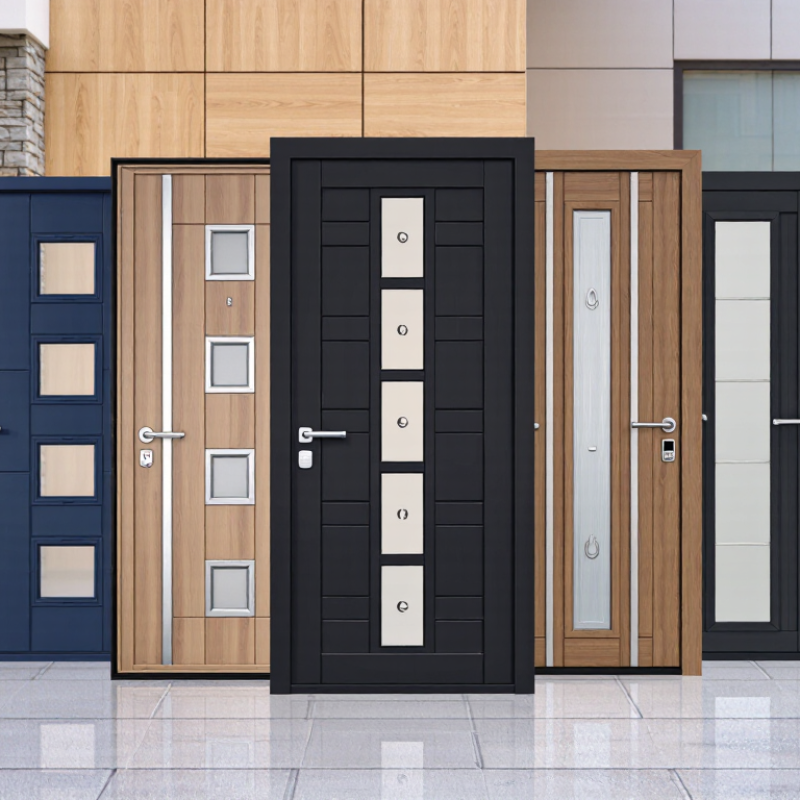
Choosing among aluminium entry door types starts with climate, opening size, and daily use. Thermal-break doors include polyamide isolators between interior and exterior aluminium sections. This reduces conductive heat transfer and helps limit condensation around the frame. The choice matters because buildings consume about 30% of global final energy, according to the International Energy Agency’s Buildings report (2023). Yet thermal performance depends on the complete assembly, including glass, seals, threshold, and installation.
Pivot doors create a dramatic entrance for wide openings. Their central hardware distributes weight differently, but the floor pivot needs accurate alignment and clean drainage. Sliding doors save swing space and suit compact entrances. However, their rollers and weather seals require careful specification. Folding systems offer a broad opening, though every additional panel introduces another sealing joint. That detail is easy to underestimate.
Global buyers should request tested air, water, wind, and thermal data under recognized standards, such as EN 14351-1 or applicable regional equivalents. The Global Status Report for Buildings and Construction (2023) identifies rising pressure to improve building energy performance, but product labels alone cannot guarantee results. A high-performance frame can fail beside a poorly sealed threshold. I have seen elegant entrances lose comfort through small installation gaps. That is an uncomfortable lesson. Review Uw values, hardware durability, drainage design, and local service capability before selecting from the ten best aluminium entry door solutions.
Aluminium entry doors can look similar, yet their thermal performance differs sharply. The U-factor measures heat transfer through the complete door assembly. Lower values indicate better insulation. According to the National Fenestration Rating Council, ratings should represent the whole product, including frame, glass, spacers, and hardware.
Frame design matters first. Standard aluminium conducts heat quickly, creating a cold bridge around the opening. A polyamide thermal break separates the interior and exterior metal paths. This design can significantly reduce heat flow, especially around the perimeter. The U.S. Department of Energy notes that framing materials strongly influence window and door energy performance. A narrow frame is not always better.
Glass selection changes the result again. Double glazing with low-emissivity coating commonly delivers lower center-of-glass U-factors than clear single glazing. Argon filling and warm-edge spacers can improve performance further. However, a high-performing glass unit cannot fully rescue a conductive frame. NFRC testing methods therefore evaluate the complete door, not only the glass center.
In practical inspections, condensation often appears first at corners and lock zones. That detail is easy to miss. Buyers should request certified whole-door data, not isolated glass figures. Climate also matters; a specification suitable for a mild coastal region may perform poorly in a cold continental winter. Even careful comparisons have limits, because installation gaps and uneven seals can raise real heat loss beyond laboratory results.
For global buyers, aluminium entry doors should be compared through tested performance, not appearance alone. EN 12207 measures air permeability under pressure. Class 4 generally provides tighter sealing than Class 1. This matters in coastal apartments, dusty streets, and buildings with mechanical ventilation. Ask for the complete test report, not only a catalog number.
EN 12208 evaluates water tightness. Ratings commonly range from 1A to 9A, with higher classes indicating stronger resistance during laboratory spray and pressure tests. A high rating is useful where wind-driven rain strikes the entrance directly. However, the result depends on the tested door size, drainage design, threshold, and installation method. Water always finds weak details.
EN 12210 covers wind resistance, including load, frame deflection, and safety. Classes usually run from 1 to 5, while deflection categories A, B, and C indicate increasing stiffness requirements. A C5 result can be more demanding than an A5 result. That detail is easy to miss. Ratings are evidence, not decoration. A perfect laboratory result can still perform poorly if anchors are spaced incorrectly or the sill is installed unevenly. Buyers should match the test pressure to local exposure, building height, and door dimensions. I would also request installation guidance and independent verification. Standards help comparison, but they do not remove practical judgment.
This chart shows the number of levels in commonly referenced classification sequences: EN 12207 air permeability (Classes 1–4), EN 12208 water tightness (Classes 1A–9A), and EN 12210 wind load resistance (Classes 1–5). Class numbers are not directly comparable between standards; EN 12208 also includes special E-classifications. These are standard classification scales, not test results or rankings for specific doors. For a shortlist of ten doors, check each product’s test report and declared classification.
1. Thermally broken aluminium doors rank highest for mixed climates. Their insulated frames reduce heat transfer and condensation. Multi-point locks improve resistance to forced entry.
2. Powder-coated solid-panel doors suit exposed coastal homes. They shed rain easily and hide small scratches. Choose marine-grade hardware, not ordinary steel.
3. Insulated glass aluminium doors balance daylight, security, and energy control. Laminated glass is harder to break through. Large panels still require careful frame support.
4. Flush aluminium doors offer clean lines and simple maintenance. Their sealed surfaces suit dusty urban areas. However, weak hinges can undermine an otherwise strong door.
5. Slatted aluminium doors provide ventilation for warm, humid regions. Fixed blades are safer than loose adjustable parts. They offer less privacy and weaker storm protection.
6. Double aluminium entry doors create a wide, welcoming opening. Reinforced meeting stiles are essential. Poor installation may cause uneven closing.
7. Thermally improved glazed doors fit cold climates better than basic aluminium frames. Look for continuous seals and insulated thresholds. Small gaps become noticeable in winter.
8. Fire-rated aluminium doors work well where compartment protection is required. Their performance depends on certified assemblies and correct installation. A decorative replacement is not equivalent.
9. Slim-frame aluminium doors maximize glass and modern appearance. They need high-quality locking points and thicker laminated glazing. Security can suffer when aesthetics dominate.
10. Basic single-skin aluminium doors remain affordable for mild climates and service entrances. They resist rot, but offer limited insulation. I would not place them in harsh coastal or freezing locations. Local wind, salt, drainage, and installer skill can change this ranking. That part is easy to underestimate.
For global buyers, the best aluminium entry door is not always the most expensive model. It is the one that fits local conditions, building codes, and daily use. Start with the actual rough-opening size, not only the door slab. Record width, height, wall thickness, sill level, and swing direction. A 10 mm error can create costly site adjustments. It happens more often than suppliers admit.
Request tested values for U-factor, air leakage, water resistance, and wind pressure. The U.S. Department of Energy reports that air leakage may account for 25–40% of household heating and cooling energy use. Poor installation can erase good factory performance. Ask for installation drawings, fixing points, drainage details, and approved sealants. Coastal projects may need stronger corrosion protection. High-wind regions may require project-specific testing.
Check certification by destination. Relevant evidence may include CE documentation under applicable European standards, UKCA requirements, NFRC-rated thermal data, or AS/NZS 2047 testing. These certificates are not interchangeable. Verify the test scope, product size, glass type, and production date. Warranty wording deserves equal attention. Confirm coverage for powder coating, hinges, locks, seals, glass, labor, and replacement shipping. A five-year warranty may exclude installation damage. That detail is easy to miss. The IEA’s buildings reports show that buildings consume about 30% of global final energy, so small envelope decisions deserve careful review.
Thermally broken aluminium doors reduce heat transfer and condensation. Multi-point locks add security. Small design details matter.
Choose a powder-coated solid-panel door with marine-grade hardware. It sheds rain and hides minor scratches. Ordinary steel may corrode quickly.
They provide daylight while controlling heat loss. Laminated glass is harder to break through. Large glass panels need strong frame support.
Measure the rough opening, wall thickness, sill height, and swing direction. A 10 mm mistake can cause costly adjustments. Measure twice.
They create a modern appearance with more visible glass. Use strong locking points and thicker laminated glazing. Appearance can sometimes lead the decision too much.
Slatted doors improve ventilation through fixed blades. They offer less privacy and weaker storm protection. Loose adjustable parts deserve caution.
Reinforced meeting stiles help the doors close evenly. Accurate installation is essential. Poor fitting can leave uneven gaps.
Request tested values for insulation, air leakage, water resistance, and wind pressure. Check the test size and glass type. Certificates are not automatically interchangeable.
Confirm coverage for coating, hinges, locks, seals, glass, labor, and replacement shipping. A five-year warranty may exclude installation damage. Read the exclusions.
They resist rot and cost less for mild climates or service entrances. They provide limited insulation. I would avoid them in freezing or salty locations.
Choosing the right Aluminium Entry Door requires more than comparing appearance and price. This guide examines thermal-break, pivot, sliding, hinged, and other door types, explaining how frame depth, glazing, seals, and panel construction influence energy performance and overall U-factor. It also clarifies how air permeability, watertightness, and wind resistance are evaluated under EN 12207, EN 12208, and EN 12210, helping buyers match door performance to their climate and building requirements.
Ten practical door options are ranked by security, durability, maintenance needs, and suitability for different weather conditions. The guide also provides a global buying checklist covering accurate measurements, opening direction, glass specifications, certification documents, installation responsibilities, replacement parts, and warranty terms. By considering thermal efficiency, drainage, hardware quality, threshold design, and after-sales support together, buyers can select an Aluminium Entry Door that offers dependable protection, long service life, and comfortable everyday use.