Fortor Security Door Co., Ltd. · Factory-direct aluminum doors, windows & sunrooms for B2B buyers in 30+ countries

0%

For global buyers, choosing the right Aluminum Entry Door means balancing security, weather resistance, thermal performance, and long-term maintenance. A sleek finish is not enough. The door must suit the building’s climate, opening dimensions, and expected daily use.

The U.S. Department of Energy’s Energy Saver guidance reports that windows can account for 25%–30% of residential heating and cooling energy use. That figure does not apply to doors alone, but it highlights why the full opening assembly deserves attention. Buyers should compare tested whole-door performance, including the frame, glazing, seals, and threshold. A door can look substantial and still allow drafts at its edges.

Architect Carl Elefante’s well-known observation, “The greenest building is one that is already built,” offers a useful reminder: improving an existing entrance can matter as much as selecting a new one. Yet replacement choices are not simple. Installation quality, local exposure, and available service support can change real-world results. Small details matter.

This guide evaluates leading Aluminum Entry Door options for 2026 through practical criteria: material and finish, insulation design, security features, customization, and supplier reliability. Product claims should be checked against documented test results and project requirements. No single model fits every market. The best choice is the one that performs reliably where it will actually be installed.
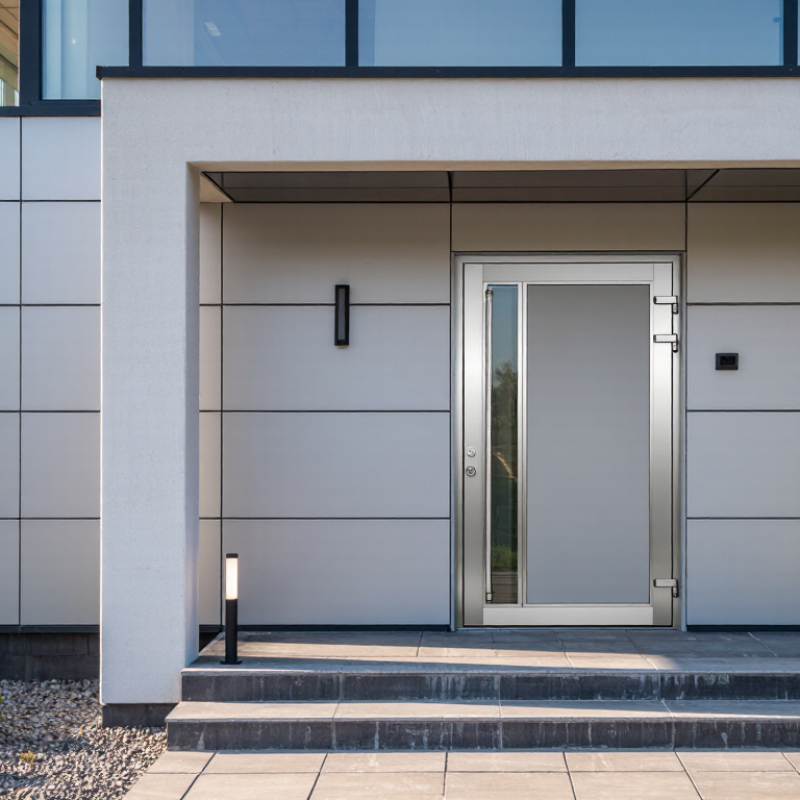
2026 Best Aluminum Entry Door for Global Buyers

What Defines an Aluminum Entry Door in 2026

What Defines an Aluminum Entry Door in 2026

An aluminum entry door is more than a metal panel. It combines an aluminum frame, a door leaf, hardware, seals, and a finish designed for everyday use. In 2026, buyers should assess the complete assembly, not just the visible surface. A slim frame can create a clean entrance, while thermal breaks help limit heat transfer through the metal. Quality weather seals also matter. They reduce drafts, rain entry, and street noise when properly fitted.

Details make a difference. Check the frame depth, corner joints, drainage paths, glazing options, and stated performance data. Ask how the finish handles sun exposure and coastal air, since conditions vary by location. A door may look sturdy in a showroom yet feel less solid after installation. That is worth considering. Clear product specifications and installation guidance offer more dependable evidence than appearance alone.

Tips: Compare measured opening sizes, not estimates. Request documented thermal, air, and water performance where available, and confirm which tests apply to the complete door system. Inspect samples in natural light; dark finishes can show dust and scratches more clearly. Also check that the handle, hinges, and lock suit the door’s weight and daily traffic. One detail is easy to miss: even a well-made door can underperform if the surrounding frame is poorly sealed.

How Aluminum Door Frames, Panels, and Finishes Are Made

2026 Best Aluminum Entry Door for Global Buyers
How Aluminum Door Frames, Panels, and Finishes Are Made

A reliable aluminum entry door begins with accurately measured profiles. Fabricators cut and join aluminum sections to form the frame, then check corners for alignment and squareness. Small gaps can affect sealing and door operation. Reinforcement may be added where hinges and locks carry extra stress. The details matter.

Panels are assembled to suit the design and performance needs of the project. They may use insulated cores, glazed sections, or solid aluminum sheets. Seals and thermal breaks help limit drafts and heat transfer, but results depend on correct assembly and installation. Even a well-made panel can underperform if the frame is poorly fitted. That part is easy to overlook.

The finish usually follows cleaning and surface preparation. Powder coating creates a durable colored layer, while anodizing develops a protective oxide surface. Ask how samples are tested for color consistency, coating thickness, and resistance to wear. Finishes can vary slightly between batches, so large projects should confirm expectations before production.

Tips: Inspect a frame sample. Check corner joints, seals, and finish under natural light. Ask for clear specifications, not just appearance claims. I’ve found that photos rarely reveal every flaw.

2026 Best Aluminum Entry Door for Global Buyers

How aluminum door frames, panels, and finishes are made: the alloy’s chemistry is one foundation of frame performance.

Selected 6063 aluminum alloy composition limits by weight percent. The ranges show minimum and maximum limits for silicon, magnesium, iron, copper, manganese, chromium, zinc, and titanium; aluminum makes up the balance. 6063 is commonly used for architectural extrusions, including door-frame profiles. Actual alloy and finish specifications should be confirmed with the supplier and applicable standards.

Which Performance Features Matter Across Climates and Regions

A good aluminum entry door must handle the weather at its actual installation site. In cold regions, look for a continuous thermal break between the inner and outer frame, plus insulated glazing where glass is used. These details can reduce heat transfer and help limit condensation near the frame. Ask for tested thermal data, not just a general claim of energy efficiency. Small differences matter.

In hot, sunny areas, durable finishes and suitable glazing help manage heat and strong ultraviolet exposure. Coastal buyers should check whether the finish, fasteners, and other exposed components are specified for salt-laden air. A door can look substantial yet still allow drafts if its weather seals or threshold fit poorly. Check air and water performance results under recognized test conditions, and compare the ratings with local exposure.

Hardware and installation deserve equal attention. Repeated wind pressure, rain driven sideways, and frequent use all place stress on hinges, locks, seals, and frame anchors. A multi-point lock may improve compression, but only when the door is adjusted correctly. Not every feature suits every climate. Even a well-tested door can disappoint if the opening is out of square or drainage is ignored; that part is easy to underestimate.

How to Compare Aluminum Entry Doors for Different Buildings

2026 Best Aluminum Entry Door for Global Buyers

How to Compare Aluminum Entry Doors for Different Buildings

An aluminum entry door should be matched to the building, not chosen by appearance alone. For a detached home, check thermal-break construction, gasket continuity, and the door’s tested U-factor. A cold-climate entrance needs different performance priorities from a shaded, humid hotel lobby. The details matter.

The UNEP Global Status Report for Buildings and Construction 2024/2025 estimates that buildings use 32% of global energy and produce 34% of energy-related CO₂ emissions.

Those figures cover whole buildings, not doors, but they show why envelope performance deserves attention. Compare certified test results rather than relying on frame material alone. NFRC ratings can help buyers assess U-factor and solar heat gain where applicable; request the exact product configuration, including glass, frame, and size. A high-traffic school may also need durable hinges, replaceable seals, and clear opening dimensions. Small hardware choices add up.

For coastal apartments, ask about the finish system and corrosion testing, then inspect drainage paths and exposed fasteners. For offices, verify accessibility, security, and expected cycle life against actual use. Ask for installation details, too. A well-rated door can still leak if the sill sits unevenly or the perimeter seal is poorly fitted. One caveat: published laboratory ratings do not perfectly predict every site condition. That is easy to overlook.

What Global Buyers Should Check Before Ordering an Aluminum Entry Door

2026 Best Aluminum Entry Door for Global Buyers

What Global Buyers Should Check Before Ordering an Aluminum Entry Door

A strong entry door is more than a thick aluminum panel. Ask for tested performance data for the complete door assembly, including its frame, seals, glazing, and threshold. Check the U-factor, air leakage, water penetration, and wind-load ratings against your project’s climate and local requirements. A frame with a thermal break can reduce heat transfer, but installation quality matters too. Small gaps around the jamb can undermine a good specification.

The UNEP 2024 Global Status Report for Buildings and Construction reports that the sector used 32% of global energy and produced 34% of energy-related CO₂ emissions in 2023. This is not a door-specific figure, but it shows why envelope performance deserves attention. Before ordering, confirm the opening dimensions, handing, sill height, hardware finish, and glazing configuration in writing. Also request the test standard, finish details, packing method, and clear warranty terms. A polished sample can hide details that matter in service.

Tips: Request drawings and test reports for the exact configuration—not a similar model. Confirm who handles replacement parts if shipping damage occurs. One detail is easy to miss: verify that the threshold suits the finished floor height.

FAQS

How should I compare aluminum entry doors for different buildings?

Match the door to the building’s use, climate, and traffic level. A shaded hotel lobby needs different performance than a cold-climate home. Do not choose by appearance alone.

Which performance data should global buyers request?

Request tested U-factor, air leakage, water penetration, and wind-load results. Ask for data covering the complete door assembly. That includes the frame, glass, seals, and threshold.

Why does the complete door configuration matter?

A test result may change with glass type, frame size, or threshold design. Request drawings and reports for the exact configuration. A similar model is not enough.

Is a thermal break important in an aluminum entry door?

Yes, a thermal break can reduce heat transfer through the frame. However, it cannot fix poor installation. Small jamb gaps still matter.

What should I inspect for a coastal apartment project?

Ask about the finish system and corrosion testing. Inspect drainage paths and exposed fasteners. Salt air can reveal weak details quickly.

What features matter for a busy school entrance?

Check durable hinges, replaceable seals, and clear opening dimensions. Confirm the expected cycle life for daily traffic. Hardware matters more than it looks.

What installation details should be confirmed before ordering?

Confirm opening dimensions, handing, sill height, and finished floor height. Make sure the threshold fits the final floor level. An uneven sill can cause leakage.

Can laboratory ratings guarantee performance on the building site?

No. Laboratory ratings cannot predict every site condition. A well-tested door may still leak with poor fitting. That limitation deserves attention.

What warranty and delivery details should buyers clarify?

Request clear warranty terms, packing details, and replacement-part arrangements. Confirm who handles damage during shipping. Write every specification down.

Conclusion

Choosing the best Aluminum Entry Door in 2026 requires more than comparing appearance and price. A high-quality door is defined by the relationship between its frame, panel, hardware, thermal barriers, seals, and surface finish. Modern manufacturing may include precision-cut aluminum profiles, insulated cores, durable coatings, and carefully assembled components designed to support security, stability, and long service life. Buyers should also consider how finishes perform under sunlight, humidity, rain, salt air, dust, and temperature changes.

Performance requirements vary by building type and region. Residential homes may prioritize insulation, comfort, and style, while commercial or institutional projects may require higher traffic durability, accessibility, and stronger security features. Before ordering, global buyers should verify dimensions, opening direction, glazing options, certification requirements, packaging, delivery terms, installation conditions, maintenance needs, and after-sales support. Comparing suppliers through documented specifications and samples can help ensure that the selected Aluminum Entry Door matches the climate, building use, local standards, and long-term project expectations.

Amelia

Amelia

Amelia is a marketing professional with a strong understanding of the products and services offered by our company. She regularly contributes informative articles to the company website, helping readers understand product features, practical applications, and points to consider when choosing a......