An Entry Door does more than welcome guests. It faces rain, sun, daily traffic, and the occasional hurried delivery. The right choice can improve comfort, security, and curb appeal, but no single style suits every home. Small details matter.
Choosing well starts with the opening itself. Measure its width, height, thickness, and swing direction before comparing products. Then consider local weather, household routines, and how much maintenance you can realistically manage. A solid wood door brings warmth and character, yet may need regular care. Fiberglass can resist moisture and temperature changes, while steel often offers strength at a practical price. Still, labels alone do not tell the whole story. Frame condition, weatherstripping, glass placement, and installation quality affect everyday performance too.
This guide explains how to weigh materials, design, energy efficiency, security features, and budget without treating any one feature as a magic answer. A door with decorative glass may brighten a dim entry, but privacy and heat gain deserve attention. A heavier model may feel reassuring, though it must fit the frame and operate smoothly. Even careful planning can miss something; homeowners sometimes focus on the finish and overlook the threshold. That is worth reconsidering. By comparing needs with real product details, you can choose an Entry Door that feels right now and remains dependable through years of ordinary use.
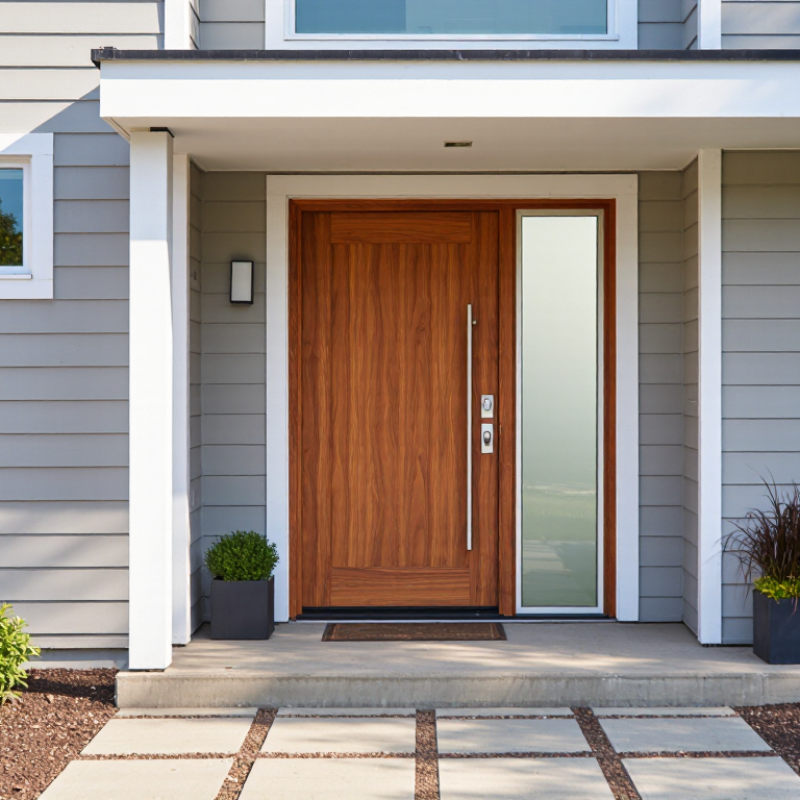
Define Needs: DOE Says Foam-Core Steel and Fiberglass Doors Insulate Better Than Wood
Choosing an entry door starts with comfort, not color. The U.S. Department of Energy notes that foam-core steel and fiberglass doors generally insulate better than wood. Their insulated cores slow heat transfer, helping reduce chilly drafts near the foyer. A solid-looking door can still perform poorly if air slips around its edges.
Check the door’s energy label for its U-factor: a lower value means less heat passes through the door. Also inspect weatherstripping, the threshold, and the fit of the frame. On a windy day, even a well-insulated slab may feel cold if the seal is worn or installation leaves gaps. Details matter.
Think about daily use, too. Steel can dent, while fiberglass may better tolerate moisture and temperature swings; wood offers a distinct look but may need more upkeep. None is perfect. Ask an installer how the full assembly will be sealed, not just what the door is made of. A small sample or showroom display cannot reveal how the door will feel beside your own drafty hallway, and I would not choose by material alone.
Compare Thermal Ratings: NFRC U-Factor Measures Heat Transfer Through Doors
When comparing entry doors, check the NFRC U-factor on each product’s rating label. It measures how quickly heat passes through the door assembly under standardized conditions. A lower U-factor generally means less heat transfer. In winter, that can help keep a hallway warmer; in summer, it can reduce unwanted heat entering. Small difference, real effect. Compare doors with similar glass areas and configurations, since glass can change the overall rating.
Tips: Match the listed rating to the exact door configuration you plan to buy. Look for the NFRC label, and ask whether sidelights or decorative glass are included. U-factor does not measure air leakage. Check weatherstripping and the frame, too.
A highly rated door still depends on careful installation. Gaps around the frame can let drafts in, even when the door itself performs well. Notice how the door closes: it should meet the seals evenly, without a bright line of daylight at the edges. A number alone can feel decisive; it isn’t. Compare ratings alongside fit, glazing, and the local climate. If the label is unclear, ask the seller for the rated assembly details before deciding.
Measure the Opening: ADA Standards Set a 32-Inch Minimum Clear Door Width
When choosing an entry door, measure the clear opening—not just the door slab. The 2010 ADA Standards for Accessible Design, Section 404.2.3, set a 32-inch minimum clear width when the door is open 90 degrees. The U.S. Access Board’s Guide to the ADA Accessibility Standards explains how to measure from the door’s face to the stop. Hinges, thick stops, and hardware can reduce the usable space. A door labeled 32 inches wide may not provide 32 inches of clearance. Measure carefully.
Check the opening with the door fully open, then consider the approach. The ADA standards also specify maneuvering clearances; for example, some latch-side approaches require 18 inches of clear space beyond the latch. These requirements apply where ADA accessibility standards govern, not automatically to every private home. Still, they offer a useful benchmark for safer everyday access. Try the route with a stroller, mobility device, or laundry basket. Awkward, but revealing. If the existing frame is narrow, a wider slab alone may not solve the problem; the frame and nearby wall may need adjustment. A qualified contractor can verify the rough opening and clearance before you order.
Compare Lock Security: ANSI/BHMA Grade 1–3 Ratings Classify Lock Performance
An entry lock’s ANSI/BHMA grade helps you compare tested performance, not judge a door by appearance. Grade 1 is the highest level, Grade 2 offers intermediate performance, and Grade 3 is the basic level. Testing can include cycles, strength, and security-related measures, depending on the lock category. Check that the rating applies to the specific deadbolt or lockset you plan to buy. A higher grade is useful, but it does not make a door impossible to force open.
Tips: Read the product specifications for the exact ANSI/BHMA grade. Look for a properly fitted deadbolt, a sturdy strike plate, and long screws that anchor into the door frame. Installation matters. Even a well-rated lock can perform poorly if its bolt misses the strike opening or the frame is weak.
Think about daily use, too. A busy household may benefit from a lock tested for frequent operation, while a quieter entrance may need less. I have seen people focus on the lock rating and overlook a loose frame; that is an easy mistake. The grade gives you a useful comparison, not a complete security assessment. Check the door, frame, and hardware as one system.
How to Choose the Best Entry Door for Your Home - Compare Lock Security: ANSI/BHMA Grade 1–3 Ratings Classify Lock Performance
| ANSI/BHMA Grade |
Relative Performance |
Typical Suitability |
What to Check for an Entry Door |
Practical Consideration |
| Grade 1 |
Highest performance level in the applicable ANSI/BHMA hardware standard; designed for demanding use and durability. |
Busy entrances, homes where maximum tested lockset durability is a priority, and other high-use applications. |
Confirm the exact product carries a Grade 1 rating for its product type and applicable standard. Check that the deadbolt, strike, and fasteners are suitable for the door and frame. |
A higher grade does not make the entire door assembly burglary-proof. Installation and frame strength still matter. |
| Grade 2 |
Middle performance level; provides tested durability for many residential and light commercial uses. |
A common option for residential entry doors when balanced performance and cost are important. |
Look for a clearly stated Grade 2 rating, a deadbolt with adequate bolt projection, and a strike plate secured appropriately to the framing. |
Compare the rating for the specific lock type; ratings and test requirements depend on the applicable ANSI/BHMA standard. |
| Grade 3 |
Basic performance level among the three grades; intended for lighter-duty applications under the relevant standard. |
Lower-use interior or secondary applications; consider carefully before choosing it for a primary exterior entry. |
Verify the product’s exact rating and installation instructions. For a main entry, consider whether a higher-rated lock better fits expected use. |
A grade describes tested hardware performance, not a guarantee against forced entry or a complete measure of security. |
| Choosing a lock for any grade |
The grade is one factor in evaluating a lock; it should be considered alongside the door, frame, and installation. |
All exterior entry doors, especially primary entrances exposed to frequent use or weather. |
Check the rating label or documentation, correct door thickness and backset, deadbolt operation, strike alignment, and secure attachment to the framing. |
Use a properly installed deadbolt and reinforce the strike and door frame where appropriate. Follow local building and fire-safety requirements. |
Note: ANSI/BHMA grades apply to specific categories of door hardware and their applicable standards. Confirm the product’s exact standard and grade in its documentation; a lock grade alone does not rate the complete door assembly.
Plan Installation: Check Performance Ratings for the Complete Door Assembly
When comparing entry doors, request performance ratings for the complete assembly: slab, frame, glazing, weatherstripping, and threshold. A door slab’s rating alone misses gaps where cold air can creep past the jamb. The National Fenestration Rating Council’s NFRC 100 and NFRC 200 procedures report U-factor and solar heat gain coefficient for tested products. Lower U-factor means less heat transfer; the label’s actual figures are more useful than a general claim such as “energy efficient.”
Check the North American Fenestration Standard, NAFS-2022, for performance-grade information. Its test framework evaluates air leakage, water penetration, and structural performance. These results apply to a specified product configuration and test size, not automatically to every custom option. Ask for the report matching your door’s glass, frame, and hardware. Small parts matter. Also confirm whether the quoted air-leakage figure uses cubic feet per minute per square foot; compare only figures reported on the same basis.
Ratings cannot compensate for a poor fit. During installation, inspect the sill for level support and look for an even, continuous seal around the frame. Keep the paperwork; later, it can help distinguish a product issue from an installation problem.
Conclusion
Choosing the best Entry Door starts with your home’s needs, including energy efficiency, accessibility, security, and installation requirements. Foam-core steel and fiberglass doors generally provide better insulation than wood doors. To compare options, check the NFRC U-factor: a lower value indicates less heat transfer through the door. Also measure the opening and consider the usable clear width; ADA standards specify a minimum clear width of 32 inches for applicable accessible doorways.
For security, compare lock performance using ANSI/BHMA Grades 1 through 3, with Grade 1 representing the highest level in this classification. Finally, assess the complete door assembly rather than the door slab alone. The frame, hardware, seals, and installation can all affect how well the finished unit performs. Matching these factors to your space and priorities can help you choose a door that is comfortable, practical, and suited to your home.