Fortor Security Door Co., Ltd. · Factory-direct aluminum doors, windows & sunrooms for B2B buyers in 30+ countries

0%

Choosing among China’s top Aluminum Exterior Door manufacturers requires more than comparing catalog photos or quoted prices. A door may look sleek in a showroom, yet perform poorly if its thermal break, weather seals, drainage paths, or hardware are weak. Look closely at the details. Ask how frame corners are joined, what finish is specified, and whether test reports match the exact model being offered. A thick profile alone proves little.

Building-science expert Joseph Lstiburek is widely associated with the reminder, “There is no such thing as a perfect building.” That perspective matters here: even a well-made Aluminum Exterior Door depends on suitable design, careful installation, and regular upkeep. A coastal entrance faces salt and wind-driven rain; a shaded doorway may stay damp after a storm. Those conditions can expose differences that a product sheet cannot. This guide compares manufacturers through practical questions about materials, customization, quality control, documentation, and export support. It does not treat a polished website as proof of factory capability.

There is room for uncertainty. Supplier claims can be difficult to verify from a distance, and specifications may change between projects. Request current samples, confirm details in writing, and ask for evidence tied to the intended configuration. Then compare responses, not just promises. The right manufacturer is not automatically the largest or cheapest. It is the one whose product, records, and communication hold up under careful review.
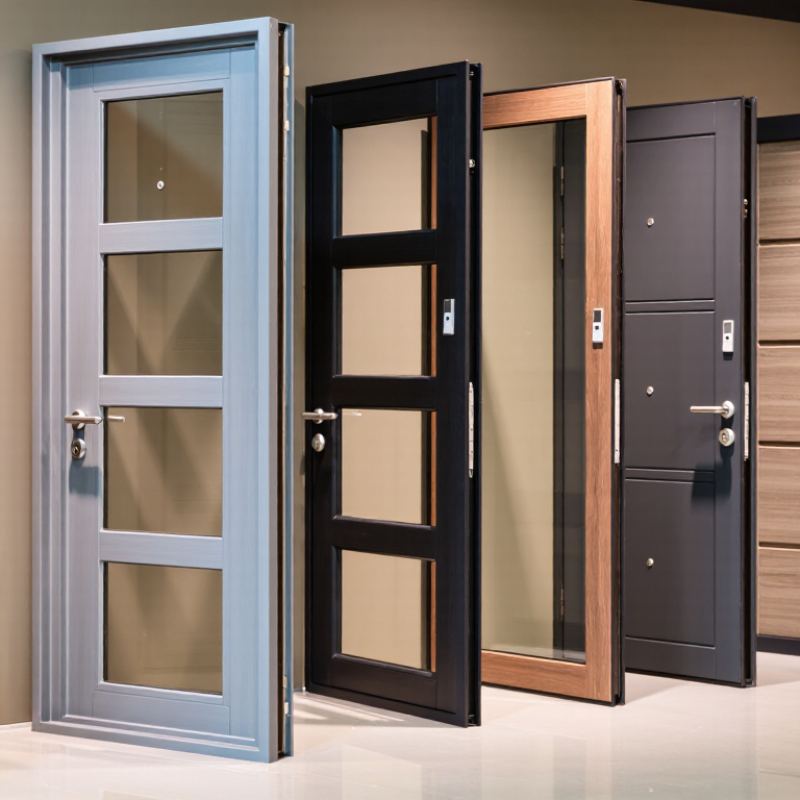
China Top Aluminum Exterior Door Manufacturers

What Defines China’s Top Aluminum Exterior Door Manufacturers?

What Defines China’s Top Aluminum Exterior Door Manufacturers?

A strong manufacturer is defined by more than a polished catalog. Look for clear specifications on aluminum profile thickness, coating, glazing, seals, and hardware. These details affect how a door feels, closes, and performs through changing weather. A well-built sample should open smoothly, sit square in its frame, and show even coating around corners and joints. Small defects are easy to miss in photographs.

Reliable suppliers also explain how products are tested and inspected. Ask for measurable information on air and water resistance, thermal performance, and hardware durability, where relevant to the project. Factory quality checks should cover frame dimensions, glass fit, drainage paths, and lock alignment. Details matter. A confident answer is useful, but written records are better. Some specifications may still need independent verification; buyers should not treat broad claims as proof.

Communication is another practical measure of capability. Experienced teams clarify opening direction, site dimensions, finish samples, packing, and installation conditions before production begins. They flag unusual requirements instead of promising that every design is simple. That caution can be reassuring. Even a capable factory can make mistakes, so confirm drawings, tolerances, and sample approval in writing. The best choice is a manufacturer whose product quality, documentation, and project support match the building’s actual needs.

How GB/T 8478-2020 Sets Benchmarks for Aluminum Door Profiles

GB/T 8478-2020 Sets Benchmarks for Aluminum Door Profiles

GB/T 8478-2020 provides a technical framework for aluminum alloy doors and windows. It addresses more than the profile alone: materials, fabrication, performance, inspection, and installation all affect the finished product. For buyers comparing exterior doors, this matters. A thick-looking frame is not proof of reliable performance.

Profile dimensions and manufacturing quality influence how well a door fits and operates. Small deviations can complicate assembly or leave uneven gaps around the frame. Surface treatment also deserves attention, especially on doors exposed to rain and strong sunlight. Ask manufacturers for test records and clear specifications, rather than relying only on photographs or broad claims. Details count.

The standard also connects components with whole-door performance, including resistance to air leakage, water penetration, and wind pressure. These results depend on more than aluminum profiles; seals, hardware, joints, and installation matter too. A profile may meet a dimensional requirement yet perform poorly in a badly assembled door. That distinction is easy to miss. Specifications still need careful reading, and real installation conditions can reveal weaknesses that a sample cannot show.

Why 2.0 mm Main Profiles Matter for Exterior Door Strength

China Top Aluminum Exterior Door Manufacturers

Why 2.0 mm Main Profiles Matter for Exterior Door Strength

A 2.0 mm main aluminum profile gives an exterior door a sturdier frame for everyday use. The added material can help the stile resist bending when a heavy glass panel hangs from its hinges. It also provides more substance around screw points, where repeated opening and closing can gradually loosen a weak connection. Feel the difference? A solid profile often feels less flexible during installation.

Thickness alone does not guarantee strength. Alloy grade, frame design, corner joints, and manufacturing accuracy all matter. A poorly joined 2.0 mm frame may perform worse than a carefully built thinner one. For exposed entrances, check how the door is reinforced near hinges and locks, and ask whether the stated thickness refers to the main profile wall. That detail is easy to overlook.

Consider the actual opening, too. A tall door facing strong winds or carrying thick glazing may need additional reinforcement, not just thicker profiles. Ask for technical drawings and test information relevant to the door’s size and configuration. I would not treat 2.0 mm as a universal rule; it is a useful starting point, but the complete assembly deserves scrutiny.

China Top Aluminum Exterior Door Manufacturers - Why 2.0 mm Main Profiles Matter for Exterior Door Strength

Evaluation Dimension What a 2.0 mm Main Profile Can Mean What to Check When Comparing Doors Why It Matters for Exterior Use
Nominal profile-wall thickness A 2.0 mm wall is thicker than a 1.4 mm wall of the same alloy and comparable cross-section. It generally provides more material in that profile wall. Confirm which frame and sash sections are 2.0 mm, how thickness is measured, and the applicable product specification and tolerances. Thickness is one factor in profile strength; it does not by itself establish the strength of a complete door.
Resistance to bending and local deformation A thicker wall can improve resistance to local denting and may increase stiffness, depending on profile shape, alloy, temper, and reinforcement. Request the complete profile cross-section and, where relevant, structural calculations or test results for the proposed door size. Large leaves and exposed locations can place greater demands on the frame, sash, and connections.
Frame and sash configuration Using 2.0 mm material in the main sections can support a robust design, but different sections may have different wall thicknesses. Check the frame, sash, meeting stiles, mullions, and reinforcement separately rather than relying on a single thickness figure. Door performance depends on the assembled system, including geometry and how its components are connected.
Hinges and hardware fixing More material at a fixing area may help provide a stronger substrate, but the fixing method and local reinforcement remain important. Review hinge type, fastener engagement, reinforcement plates, and the hardware manufacturer's load limits. Hinges transfer the door-leaf load to the frame; profile thickness alone cannot confirm hardware capacity.
Door size and weight A 2.0 mm profile is not a universal solution for every opening or leaf size. Compare the proposed maximum leaf dimensions and weight with the system supplier's documented limits. Oversized or heavy doors may require a different section design, additional reinforcement, or specified hardware.
Wind and weather performance Thicker profiles may contribute to a stronger assembly, but they do not establish wind-load, air-leakage, or water-penetration performance. Ask for test reports or ratings for the complete door system, including its tested size and configuration. Seals, drainage, glazing or infill, locks, installation, and profile design all affect exterior-door performance.
Alloy and temper Wall thickness is only one material detail; aluminum alloy and temper also affect mechanical properties. Request the stated alloy and temper for the profiles and verify them against the applicable specification. Two profiles with the same nominal thickness may not have identical material properties or performance.
Corner joints and assembly quality A 2.0 mm profile cannot compensate for poorly made joints or inadequate assembly. Inspect corner connections, mechanical fastening, seal continuity, drainage paths, and manufacturing quality controls. Joints and assembly influence the stability, weather resistance, and service life of the finished door.
Specification and verification “2.0 mm” should be treated as a profile specification to verify, not as a standalone performance rating. Request drawings, a section schedule, thickness inspection records, and relevant whole-product test documentation. Clear documentation helps confirm that the supplied product matches the quoted design and intended application.

Note: The comparisons above are general guidance, not a product certification or a universal building-code requirement. Actual door strength and weather performance depend on the complete system design, materials, dimensions, hardware, fabrication, and installation.

How GB/T 7106-2019 Tests Air, Water, and Wind Resistance

China Top Aluminum Exterior Door Manufacturers

GB/T 7106-2019 sets the test methods for air permeability, watertightness, and wind-load resistance in exterior doors and windows. For air testing, a chamber applies controlled pressure differences while technicians measure leakage through joints and seals. Small gaps matter. The IEA’s 2023 Global Status Report for Buildings and Construction estimates that buildings used about 30% of global final energy in 2022. That figure covers buildings broadly, but it shows why a door’s sealing performance deserves careful attention.

In the water test, technicians spray the door while increasing pressure, then record when and where water enters. Wind testing applies positive and negative pressure; the report records deformation and checks for damage. These measurements help buyers compare products, but only when the tested size, frame, seals, and configuration match the door being specified. A strong result on one assembly may not transfer to another.

Installation still matters. A laboratory rig cannot reproduce every uneven wall, rushed seal, or site-specific exposure. That is not trivial. Ask for the GB/T 7106-2019 test report, not just a general performance claim, and check its specimen details against the project. Even a sound test result can create false confidence if the installed door differs from the tested assembly.

How to Compare Manufacturers by Testing, Certifications, and Capacity

China Top Aluminum Exterior Door Manufacturers

How to Compare Manufacturers by Testing, Certifications, and Capacity

A polished sample tells only part of the story. Ask manufacturers for test reports tied to the exact door system, glass, seals, and hardware you plan to buy. Useful checks include air leakage, water penetration, wind resistance, thermal performance, and repeated opening cycles. Look for clear test dates and measurable results. Ask who performed each test, and request the full report, not just a certificate image.

Certifications can help, but their scope matters. Confirm that the document covers the relevant product type and manufacturing site. Check whether it remains valid, and whether the tested configuration matches your project. A certificate for one model may not cover another. That detail is easy to miss. If anything seems unclear, ask for written confirmation from the issuing body or testing laboratory.

Capacity should be judged beyond factory size. Ask how many production lines are active, how orders are scheduled, and how quality checks are recorded. A useful factory visit might include watching seal installation, corner joining, and final inspection. Request a realistic lead time for your order volume, plus evidence of traceability for profiles and hardware. I would also start with a pilot order when possible. It adds time, admittedly, but can reveal communication gaps before they become expensive.

How to Compare Aluminum Exterior Door Manufacturers

Suggested evaluation weights for comparing testing, certifications, and production capacity—not measured market data.

Review test reports for project-relevant air, water, and structural performance; confirm that certifications apply to the products and manufacturing site being quoted; and verify capacity with documented output and lead-time records. Applicable requirements may include EN 14351-1 or AAMA/WDMA/CSA 101/I.S.2/A440, depending on the market and project.

FAQS

What details should I check in an aluminum exterior door?

Check profile thickness, coating, glazing, seals, and hardware. Inspect corners and joints for even coating. Photos can hide flaws.

What does GB/T 8478-2020 cover?

It addresses materials, fabrication, performance, inspection, and installation for aluminum alloy doors and windows. A thick-looking frame alone proves little.

Which test results are useful when comparing door systems?

Ask for results on air leakage, water penetration, wind resistance, thermal performance, and repeated opening cycles. Check that the report covers your exact glass, seals, and hardware.

How can I check whether a certificate applies to my order?

Confirm its product type, manufacturing site, validity, and tested configuration. One model’s certificate may not cover another. I would not rely on an image alone.

What should I look for in a factory inspection?

Watch seal installation, corner joining, and final inspection. Ask how staff record quality checks and trace profiles and hardware. A brief visit can still miss things.

How can I judge a manufacturer’s production capacity?

Ask how many lines are active, how orders are scheduled, and what lead time suits your order volume. Factory size alone is not enough.

Why should drawings and samples be approved before production?

Written approval can confirm opening direction, dimensions, finishes, and tolerances. A door that looks right in a sample may behave differently on site.

Is a pilot order worth considering?

It can reveal packing, quality, or communication gaps before a larger order. It adds time, admittedly, but that may be useful.

Conclusion

Choosing a reliable Aluminum Exterior Door manufacturer involves looking beyond appearance and price. Strong candidates demonstrate consistent production quality, clear technical specifications, suitable quality-control procedures, and the ability to meet project requirements. GB/T 8478-2020 provides a reference for evaluating aluminum door profiles, including their construction and performance characteristics. For exterior applications, a main profile thickness of 2.0 mm can support greater structural strength and durability, though the complete door system and its installation also affect performance.

GB/T 7106-2019 offers a framework for assessing resistance to air leakage, water penetration, and wind pressure. Buyers can compare manufacturers by reviewing relevant test results, certifications, production capacity, and inspection practices. Checking whether testing applies to the complete door assembly—not just individual profiles—can help clarify how products are likely to perform in real-world conditions. A careful comparison of these factors helps identify a manufacturer suited to the intended climate, building design, and project scale.

Charlotte

Charlotte

Charlotte is a dedicated marketing professional with extensive experience in developing clear, practical, and engaging content for modern businesses. As a key contributor to the company’s marketing team, she has developed a deep understanding of its products, service standards, and customer-focused......