Fortor Security Door Co., Ltd. · Factory-direct aluminum doors, windows & sunrooms for B2B buyers in 30+ countries

0%

An Aluminum Front Door can make an entrance feel crisp and substantial. Its slim frame leaves more room for glass, while a powder-coated finish can handle years of rain, sun, and daily use. But material alone does not guarantee comfort or durability. The frame design, weather seals, glazing, and installation all matter.

The U.S. Department of Energy reports that windows account for about 25% to 30% of residential heating and cooling energy use. That figure concerns windows, not doors, so it should not be applied directly to every entrance. Still, it highlights why glazed door sections and frame performance deserve attention. Look for tested thermal performance, tight seals, and a thermally broken frame that reduces heat transfer between its exterior and interior surfaces. NFRC labels can help buyers compare rated products, while AAMA/WDMA/CSA 101/I.S.2/A440 sets performance requirements for fenestration products, including doors.

Small details show up every day. A latch that closes cleanly. A threshold that sheds water. A frame that stays comfortable to touch on a cold morning. Aluminum offers strength and low maintenance, but poorly specified products can feel cold or allow drafts. It is not magic. Ask for product test data, warranty terms, and installation guidance before choosing. A well-made Aluminum Front Door can balance clean design with practical performance, provided the whole assembly—not just the frame—gets careful attention.
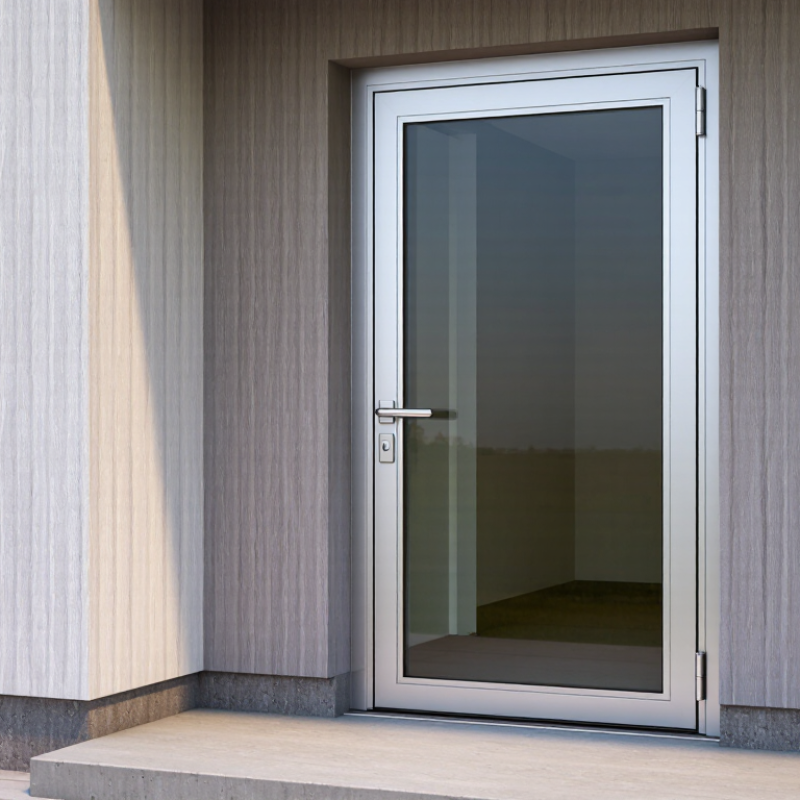
Why Choose an Aluminum Front Door?

What Defines an Aluminum Front Door?

An aluminum front door is defined by its material: aluminum forms the door frame and, in many designs, the outer face of the door leaf. The center may contain insulated panels or glass, depending on the style and performance needs. So “aluminum door” does not always mean a solid sheet of metal.

The frame is usually made from extruded sections, shaped to hold hinges, locks, seals, and glazing. Look closely at the corners and edges. Tight joints and continuous weather seals help limit drafts and water entry. Thermal breaks, which separate the inner and outer parts of the frame, can reduce heat transfer. Their effectiveness depends on the full door assembly, not just one feature.

Finishes vary, from powder-coated colors to anodized surfaces. A smooth finish can be easy to wipe clean, though scratches may still show. Aluminum resists rust, but hardware and seals can wear over time. Check how the door closes after installation; even a well-made unit can feel drafty if it is poorly fitted. That detail is easy to overlook.

How Aluminum Doors Are Constructed

An aluminum front door begins with extruded profiles, shaped by forcing heated aluminum through a die. Hollow sections help keep the frame light while providing space for reinforcement and hardware. At the corners, mechanical fasteners or welded joints connect the frame components. That joinery matters. In thermally improved designs, polyamide strips separate the inner and outer aluminum surfaces, slowing heat transfer. The strip is small, but its continuity around the frame affects performance. Not every aluminum door includes this feature, so it is worth checking the construction details.

Glazing is held in place with gaskets and beads, while drainage channels guide water back outside rather than into the frame. Weather seals meet the threshold and jambs; adjustable hinges help maintain an even gap as the door settles. Powder coating or anodizing protects the visible surface, though finish quality also depends on preparation and care. The International Aluminium Institute’s 2024 report on aluminium recycling states that recycling uses about 5% of the energy needed for primary production. That figure concerns recycled material, not every finished door. A useful inspection detail: look at a section drawing to see whether thermal breaks, seals, and drainage paths continue through the assembly.

What Benefits Aluminum Offers for Homeowners

Why Choose an Aluminum Front Door?

For homeowners, an aluminum front door offers practical strength without feeling heavy. I have seen installers carry large aluminum panels through narrow hallways with less effort than steel units. This lighter weight can reduce strain on hinges and surrounding frames. A well-built door also resists swelling, cracking, and warping caused by seasonal moisture. That matters when rain, frost, and strong sunlight affect the entrance every week.

Maintenance is another clear benefit. Most aluminum surfaces need only mild soap, water, and occasional hardware checks. Quality powder coating helps preserve the color and limits surface corrosion. Aluminum can also support slim frames and larger glass panels, allowing more daylight into a dark hallway. With insulated cores, suitable glazing, and thermal breaks, the door can improve indoor comfort. Results still depend on the complete system and professional installation.

It is not flawless. Poorly designed aluminum can transfer heat quickly, creating a cold interior surface during winter. Scratches and dents may also remain visible, especially on darker finishes. The initial cost can exceed basic timber or steel options. I would not choose aluminum by appearance alone. Check the frame construction, weather seals, security hardware, drainage details, and warranty terms. A small installation gap can undermine impressive product specifications. Careful measuring often matters more than a fashionable finish.

Why Choose an Aluminum Front Door? — What Benefits Aluminum Offers for Homeowners

Feature What Aluminum Offers Why It Matters to Homeowners What to Consider
Strength with relatively low weight Aluminum is a lightweight structural metal that can be formed into sturdy door frames and profiles. A lighter door can be easier to operate, while well-designed profiles can support large panels or glazed sections. Overall strength depends on the door’s design, construction, hardware, and installation—not just the material.
Resistance to rot and swelling Unlike wood, aluminum does not rot, and it does not absorb moisture in the same way. It can be a practical option for entrances exposed to rain or changing humidity. Inspect weather seals and drainage details periodically; these components still wear and may need attention.
Corrosion resistance Aluminum naturally forms a thin oxide layer that helps protect it from further corrosion. Protective finishes can add another layer of defense. A suitable finish can help the door retain its appearance in many outdoor settings. Corrosion resistance varies with the environment and finish. Coastal salt exposure and harsh cleaning products may require extra care.
Low routine maintenance Aluminum generally does not need the regular sanding and repainting often associated with exposed wood. Routine cleaning and occasional checks of seals and moving parts can keep the entrance in good working order. Painted or coated surfaces can still scratch, fade, or need repair over time.
Thermal performance options Aluminum conducts heat readily, but insulated cores, thermal breaks, and well-sealed glazing can improve a door’s overall energy performance. A properly specified door can help limit drafts and heat transfer at the entry. Compare the complete door’s tested thermal-performance information. An aluminum frame alone does not guarantee good insulation.
Design flexibility Aluminum can be manufactured in a range of shapes, colors, and configurations, including doors with large glazed areas. Homeowners can match different architectural styles and choose how much natural light enters the space. Glazing type, frame proportions, finish, and local building requirements affect the final design and performance.
Security potential Aluminum door systems can accommodate multi-point locks and reinforced hardware. A complete, well-installed system can contribute to a secure entrance. Security depends on the door, frame, locks, glazing, hinges, and installation together; material choice alone is not a security rating.
Recyclability Aluminum is recyclable, although the recycled content and end-of-life recovery depend on the product and local recycling options. Recyclability may be a consideration for homeowners comparing material choices. Ask about recycled content and check whether local facilities accept the door’s materials and components.

Practical tip: Compare complete door systems, including frame, insulation, glazing, seals, hardware, finish, and installation details. Performance varies by product and configuration.

Which Design and Performance Factors to Compare

Why Choose an Aluminum Front Door?

Choosing an aluminum front door requires more than comparing colors and prices. The frame’s construction affects insulation, stability, security, and daily comfort. A thermally broken frame uses an insulating barrier between interior and exterior aluminum. This reduces heat transfer and helps prevent interior condensation. Without that barrier, a door may feel cold around the edges during winter.

Ask about tested U-values, air leakage, water resistance, and wind performance. These figures reveal more than a polished showroom display. A well-fitted gasket should compress evenly around the frame. The threshold should shed rain without creating a difficult step.

Small details matter. On a windy day, poor sealing can create a faint whistle and noticeable drafts. I have found that installation quality often changes the final result more than the advertised material.

Design choices deserve the same careful comparison.

Narrow sightlines create a lighter appearance, but slimmer profiles may limit hardware or glazing options. Full-height glass brings daylight inside, although privacy and solar heat gain need attention. Textured or matte finishes can hide fingerprints better than glossy surfaces. Check how the coating is tested for fading, scratching, and coastal exposure. Door hardware should feel solid, operate smoothly, and remain accessible after years of use. I would also question overly perfect claims; no finish stays untouched, and even excellent doors need cleaning, adjustment, and occasional seal replacement.

How Installation and Maintenance Affect Long-Term Use

Why Choose an Aluminum Front Door?

How Installation and Maintenance Affect Long-Term Use

Aluminum front doors offer strength, slim profiles, and reliable weather resistance. However, the material alone does not guarantee long-term performance. The U.S. Department of Energy reports that air leakage can cause 5% to 30% of a home’s heating and cooling energy use. Poor installation can turn a well-designed door into a costly draft source. Careful measuring matters. Installers should check the opening, level the frame, and seal every joint continuously.

Thermal performance also depends on the door assembly. The National Fenestration Rating Council evaluates U-factor and air leakage through standardized testing. Lower U-factor values generally indicate better insulation. Yet, laboratory ratings cannot fully predict a poorly sealed wall connection. This is an uncomfortable detail. Installation quality may matter as much as the product specification.

Maintenance is simple, but not optional. Inspect weatherstripping each season for compression, cracks, or gaps. Clean drainage channels before leaves and dust block them. Lubricate hinges and locks with a suitable product. Check the threshold after heavy rain. A small water mark can reveal a larger sealing problem. The International Aluminium Institute reports that recycling aluminum requires about 95% less energy than producing primary aluminum, supporting its long service life and material recovery potential. Still, I would not call an aluminum door maintenance-free. Its finish can fade, hardware can loosen, and neglected seals can quietly reduce comfort for years.

Why Choose an Aluminum Front Door?

Aluminum front doors are resistant to corrosion, moisture, and seasonal weather changes. Correct installation helps maintain alignment, drainage, insulation, and weather sealing, while routine maintenance supports long-term performance.

The chart shows typical residential planning intervals for key installation-related inspections and maintenance tasks. Actual schedules may vary according to climate, exposure, door design, and local installation guidance.

FAQS

What is an aluminum front door made of?

Aluminum usually forms the frame and outer face. The center may contain insulated panels or glass.

Is an aluminum door a solid sheet of metal?

Not always. Many designs use a metal frame around glass or an insulated core.

How can thermal breaks help?

They separate the frame’s inner and outer sections, reducing heat transfer. The full door assembly still matters.

What should I inspect around the frame?

Check corner joints, edges, and weather seals. Gaps can let in drafts or water.

How much maintenance does an aluminum door need?

Usually, mild soap and water are enough for the surface. Check the hardware and seals occasionally.

Can aluminum doors bring more daylight indoors?

Yes. Slim frames can make room for larger glass panels, brightening a dim hallway.

Are aluminum doors resistant to seasonal weather?

Aluminum resists rust and does not usually swell or warp from moisture. Hardware and seals can still wear.

What drawbacks should I consider?

Poor designs may transfer heat quickly, while dark finishes can show scratches. Dents may remain visible, too.

Does installation affect comfort?

Yes. Even a well-made door can feel drafty if fitted poorly. Measure carefully.

Conclusion

An Aluminum Front Door is an entrance door built with aluminum framing, often combined with glass or insulated panels. Its construction balances strength with a relatively light weight, while suitable finishes and thermal breaks can help support durability and indoor comfort. For homeowners, aluminum can offer resistance to everyday wear, a clean appearance, and flexibility in styles ranging from simple, modern designs to options with larger glass areas.

When comparing doors, consider the frame and panel construction, insulation performance, weather sealing, security features, glazing, finish, and the way each design suits the home. Professional installation helps ensure the door is aligned and sealed properly, which can reduce drafts and support smooth operation over time. Routine care is generally straightforward: clean the surfaces, check seals and hardware, and address minor wear as it appears. Choosing a door that matches the home’s climate, use, and design preferences can help provide dependable long-term performance.

Charlotte

Charlotte

Charlotte is a dedicated marketing professional with extensive experience in developing clear, practical, and engaging content for modern businesses. As a key contributor to the company’s marketing team, she has developed a deep understanding of its products, service standards, and customer-focused......