CE Certified Architectural Entry Systems
Factory-direct thermal break aluminum, galvanized steel security, and architectural pivot entrance solutions for commercial and luxury residential projects worldwide.
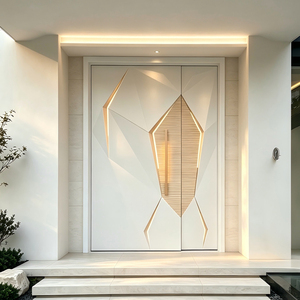
Architectural Modern Entrance Door Custom Luxury Metal Front Door
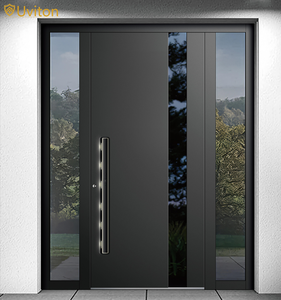
Foshan Direct Black Aluminum Residential Apartment Door with Privacy Glass
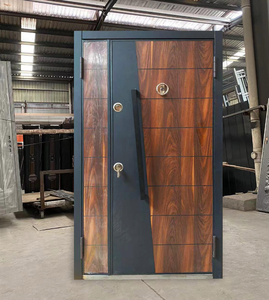
TECHTOP Premium High-Security Exterior Steel Entry Door System
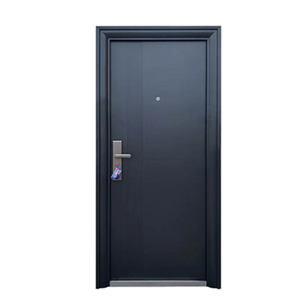
Anti-Theft Galvanized Steel Security Front Entry Door for Villas & Apartments
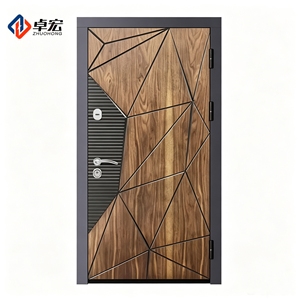
Heightened Floor-to-Ceiling Minimalist Smart Biometric Entry Door

Fireproof Commercial Hotel Lobby Entrance Door Moisture-Proof System
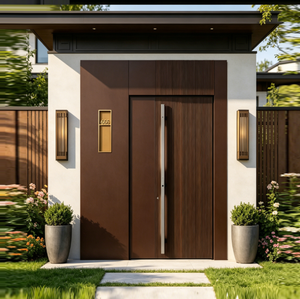
Modern Luxury Villa & Hotel Main Entrance Architectural Pivot Door
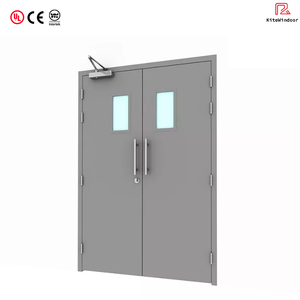
Solid Stainless Steel Fire-Rated Double Metal Security Entry Door
Engineering CE Certified Energy-Efficient Entry Systems
Technical evaluation of thermal transmittance, structural integrity, and international building code compliance for international project specifiers and procurement directors.
1. The Physics of Thermal Transmittance in Architectural Doors (U-Factor Engineering)
In modern architectural engineering, the exterior entrance door serves as both the aesthetic centerpiece of a facade and a critical thermal envelope boundary. For B2B importers, general contractors, and real estate developers operating under tight environmental mandates—such as the European Union’s Energy Performance of Buildings Directive (EPBD) or North America's IECC requirements—selecting entry doors with verified thermal performance is non-negotiable.
Thermal performance is defined by the overall U-factor (expressed in W/m²K in Europe and BTU/h·ft²·°F in the USA), measuring the rate of non-solar heat transfer through the door assembly. Standard solid metal or uninsulated aluminum doors act as massive thermal bridges, conducting heat rapidly and leading to internal condensation, surface mold, and catastrophic HVAC thermal loss. Premium CE-certified energy-efficient doors overcome this thermal bridge through three core engineering breakthroughs:
PA66 GF25 Polyamide Thermal Breaks
Structural aluminum extrusions are split and mechanically crimped with 25% glass-fiber reinforced polyamide (PA66 GF25) strips. This low-conductivity polymer barrier interrupts the metal-to-metal thermal path, dropping heat flow by up to 70%.
Polyurethane & Aerogel Core Infill
Door panel cores are injected with high-density polyurethane (PU) foam (45 kg/m³) or integrated with silica aerogel blankets. These inert insulating materials achieve thermal conductivity values (λ) as low as 0.022 W/m·K.
Triple Low-E Argon Glazing Units
Vision panels feature double or triple-pane tempered glass separated by warm-edge composite spacers, filled with 90%+ pure argon gas, and coated with microscopic metallic low-emissivity layers.
Information Gain: Mathematical Model of Door Assembly Heat Loss
The total heat transfer ($Q$) across an entry system is governed by $Q = (U_{frame} \cdot A_{frame} + U_{panel} \cdot A_{panel} + U_{glass} \cdot A_{glass} + \Psi \cdot L) \cdot \Delta T$. Fortor's engineered CE-certified entry doors utilize continuous EPDM triple-gasket perimeter seals and insulated thermal breaks to minimize the linear thermal bridge coefficient ($\Psi$), maintaining assembly U-factors below 1.0 W/m²K even under extreme climatic differentials ($\Delta T = 45^\circ\text{C}$).
2. CE Certification Framework & EN 14351-1 Compliance Deep-Dive
For entry doors exported into the European Economic Area (EEA), the CE mark is not merely a marketing badge—it is a mandatory legal declaration of conformity backed by Initial Type Testing (ITT) and Factory Production Control (FPC) audits under standard EN 14351-1:2006+A2:2016 (Windows and doors - Product standard, performance characteristics).
When auditing China-based suppliers, international procurement directors must verify that test reports originate from accredited Notified Bodies (NB). The essential performance characteristics evaluated under EN 14351-1 include:
| Performance Characteristic | Test Standard | CE Requirement / Class Benchmark | Fortor Engineering Standard |
|---|---|---|---|
| Air Permeability | EN 1026 / EN 12207 | Class 1 to Class 4 (Class 4 = Highest Tightness) | Class 4 (600 Pa test pressure) |
| Watertightness | EN 1027 / EN 12208 | Class 1A to Class 9A / Exxx (Non-sheltered) | Class E900 (900 Pa static water pressure) |
| Resistance to Wind Load | EN 12211 / EN 12210 | Class A1 to Class C5 (Class C5 = Min. Deflection) | Class C5 (2000 Pa structural design pressure) |
| Acoustic Performance | EN ISO 10140-2 | $R_w (C; C_{tr})$ expressed in Decibels (dB) | 38 dB – 45 dB Sound Reduction |
| Thermal Transmittance | EN ISO 10077-1 & -2 | Declared $U_d$ value in W/m²K | $U_d \le 0.95 \text{ W/m}^2\text{K}$ (Passivhaus Compatible) |
| Burglar Resistance | EN 1627 to EN 1630 | RC1 N to RC4 Security Rating | RC3 / RC4 Multi-point gear locking |
3. Global Future Procurement & Sourcing Trends (2025–2030)
As the commercial building sector accelerates toward net-zero carbon targets and smart building automation, the procurement dynamics for exterior entry doors are shifting dramatically. Key trends shaping global procurement strategies include:
- Shift to Oversized & Pivot Architecture: High-end residential villas and luxury commercial hotels are moving away from traditional small single-hinged doors. Demand for heightened floor-to-ceiling entrance doors (3.5m+ height) with heavy-duty bottom pivot hardware capable of supporting up to 500 kg panel weight has surged by 140% year-over-year.
- Smart IoT & Motorized Multi-Point Locking Integration: Modern security demands hands-free, high-speed access control. Suppliers must seamlessly integrate motorized automatic locking systems (e.g., German Winkhaus or FUHR systems) compatible with facial recognition, biometric fingerprint scanners, encrypted RFID, and smart home protocols (Matter / Zigbee).
- Hybrid Composite Material Structures: Pure wood doors decay under severe climate exposure, while uninsulated steel doors corrode and transfer heat. Future procurement favors hybrid engineering: electro-plated anti-corrosion galvanized steel or 6060-T6 aluminum exterior faces bonded with interior real-wood timber veneers or ceramic architectural slabs over thermal insulation cores.
- Carbon Footprint Decarbonization & EPD Certification: European and North American buyers increasingly require Environmental Product Declarations (EPDs) documenting the embodied carbon of aluminum extrusions. Factory production utilizing recycled aluminum billets and eco-friendly powder coatings (QUALICOAT Class 2/3) receives preferential scoring in tender evaluations.
4. Strategic Advantage: Why International Buyers Partner with Fortor
Fortor Security Door Co., Ltd. operates a specialized 20,000 square meter manufacturing facility in Guangdong, China—the global epicenter of high-end aluminum and steel architectural hardware fabrication. Backed by over 17 years of dedicated export engineering, Fortor bridges the gap between Asian manufacturing cost efficiency and rigorous Western building code compliance.
Full-Scale Vertical Manufacturing
Profile cutting, CNC machining, thermal break insertion, robotic welding, surface coating, and final assembly take place 100% inside our owned 20,000㎡ plant, ensuring strict lead time and quality control.
International Testing Compliance
Our doors are tested against CE (EN 14351-1), NFRC, AS 2047, CSA, and ENERGY STAR standards, backed by third-party certified test reports for permit and tender approval.
Export Crating & Pre-Assembly Inspection
100% of finished orders undergo pre-shipment frame trial alignment, hardware cycle testing, and weather seal verification before packing into reinforced export-grade plywood crates.
Comparing Entry Door Core Technologies
Technical evaluation matrix to assist project managers and architects in selecting the optimal system architecture for specific application scenarios.
| Door System Type | Thermal Performance ($U_d$) | Security Level (EN 1627) | Max Panel Height | Primary Application Scenario |
|---|---|---|---|---|
| Thermal Break Aluminum Entry | 0.9 – 1.3 W/m²K | RC2 / RC3 Class | 3200 mm | Modern Residential Villas, Luxury Apartments |
| Galvanized Steel Heavy Security | 1.2 – 1.6 W/m²K | RC3 / RC4 Class | 2800 mm | High-Risk Residential, Multi-Family Main Entrances |
| Architectural Glass-Panel Pivot | 1.1 – 1.5 W/m²K | RC2 / RC3 Class | 4000 mm | Grand Villa Porticos, Luxury Hotel Lobbies |
| Fire-Rated Stainless Steel Double | 1.4 – 1.8 W/m²K | EI30 to EI90 Fire Rated | 3000 mm | Commercial Hospitality, Hotel Escape & Lobby Gates |
Frequently Asked Technical & Sourcing Questions
Expert answers for developers, architects, and importers regarding customization, certification compliance, quality control, and international delivery.
Q1: How do you verify CE marking authenticity for overseas customs clearance?
Every CE-certified shipment from Fortor includes a formal Declaration of Performance (DoP) document referencing our accredited Notified Body test reports according to EN 14351-1. CE labels are permanently affixed to the door frame rebate, detailing air permeability, watertightness, wind resistance, and thermal transmittance ratings required by EU customs and building inspectors.
Q2: Can Fortor manufacture custom sizes, colors, and hardware integrations?
Yes. 100% of our orders are built-to-order according to project architectural drawings or field opening dimensions. We offer unlimited RAL powder-coating colors, anodized metallic finishes, and authentic wood-grain sublimations, alongside hardware prep for German GU, Winkhaus, Hoppe, or local smart lock integration.
Q3: What prevents oversized pivot and heightened doors from warping under thermal pressure?
Oversized doors subjected to direct sunlight experience high thermal expansion on the exterior face while the interior remains air-conditioned (the "bi-metal effect"). Fortor prevents panel warping by engineering tension-adjustable internal anti-warping tie rods, specialized expansion-decoupled thermal break profiles, and stabilized polyurethane cores.
Q4: What is the typical production lead time and CAD drawing approval process?
Upon receiving your project schedule or opening elevations, our engineering department generates detailed 2D/3D shop drawings (showing structural sections, anchors, thresholds, and drainage details) within 48 hours. Once approved, production typically takes 25 to 35 calendar days, depending on hardware and custom finish specifications.
Q5: How are doors packaged to prevent damage during sea transport?
Doors are wrapped in 3-layer protective film, corner-protected with high-density EPE foam, and encased in fully enclosed, IPPC-certified fumigation-free solid plywood crates. Glass panels feature rubber protective spacers, and hardware boxes are separately strapped to prevent surface abrasion during long-distance container transit.
Q6: Do you offer jobsite technical support and local warranty coverage?
We provide comprehensive installation manuals, exploded assembly diagrams, and 24/7 video technical support for installation crews. We maintain active partnerships and local service centers across North America, Australia, the UK, and the Caribbean. All door structures carry a 10-year warranty, with 5 years on surface finishes and hardware.
Ready to Engineering Your Project's Entrance Systems?
Send us your project elevations, opening schedules, or performance criteria. Our technical engineering team will deliver a comprehensive proposal, CAD shop drawings, and competitive factory-direct pricing within 24 hours.
Inquire Now