CE Certified Thermal Insulated Aluminum Entry Systems
Engineered in our 20,000㎡ precision manufacturing facility to satisfy international building standards including CE EN 14351-1, NFRC, AS 2047, and CSA guidelines.
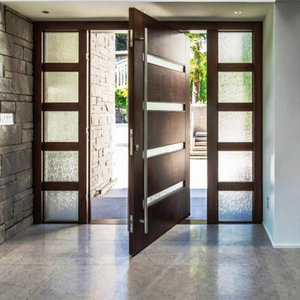
Top Quality High Glossy Main Entrance Exterior Wood Pivot Entry Doors with Side Lite
- System: Heavy Pivot Entry
- Thermal Break: PA66GF25 Barrier
- Glazing: Double Low-E Glass
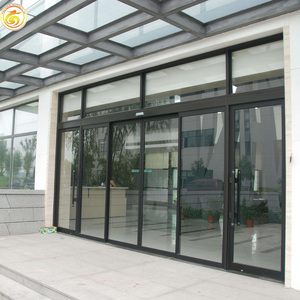
Hurricane Impact Resistant Storefront Doors With Decorative Grilles for Coastal Commercial Buildings
- Rating: Coastal Wind C5
- Glass: SGP Laminated Glass
- Standard: CE EN 14351 / ASTM
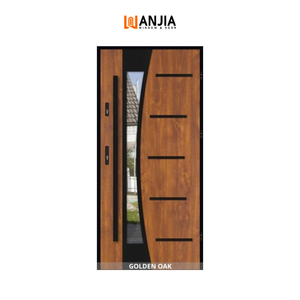
Factory Warranty Directly Custom Wood Grain Finish Front Entry Door with Mirrored Glass Residential Exterior Security Doors
- Finish: Qualicoat Sublimation
- Security: Multi-Point Locking
- U-Value: ≤ 1.1 W/m²K
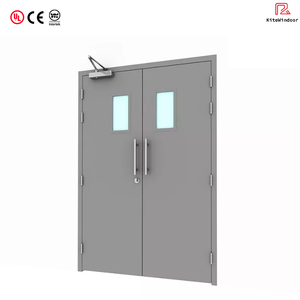
Custom Residential Exterior Front Entry Security Fire-Rated Double Metal Steel Doors Solid Stainless Steel Fire Rated Door
- Fire Class: EI60 / EI120 Rated
- Infill: Thermal Mineral Wool
- Use: Commercial / Luxury
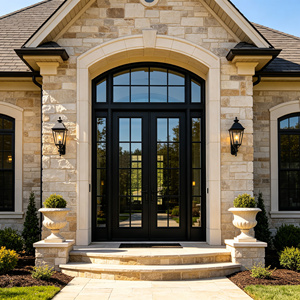
Thermal Break Aluminum Double Entry Door Double Glazed Glass Grand Entrance With Transom for Luxury Residential Homes
- Profile: 6063-T6 Aluminum
- Transom: Integrated Glazed
- Sealing: EPDM Triple Gaskets
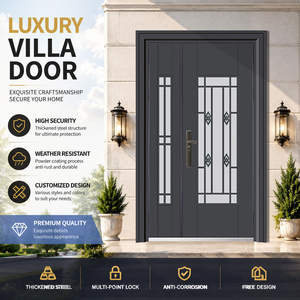
Customized Modern Swing Glass Entrance Doors With Anti-Theft Feature Steel Frame For Villa And House Front Entry
- Hardware: German European Groove
- Glass: 8mm+12Ar+8mm Temp
- Security: RC3 Anti-Burglary
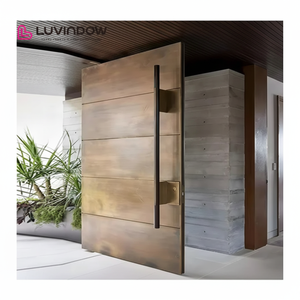
American Style Contemporary Solid Wood Entry Main Entrance Wooden Doors Front Doors for Houses Modern Exterior Main Pivot Door
- Core: Aluminum-Clad Composite
- Weathering: UV Resistant Armor
- Opening: Smooth Offset Pivot
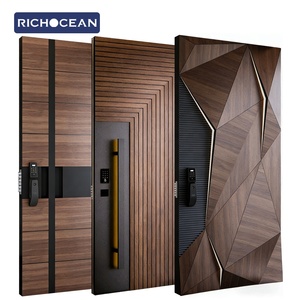
Richocean Luxury Bulletproof Lamborghini Front Entry Door Aluminum Storm Security Voordeur Residential Doors
- Armoring: BR4 / FB4 Bulletproof
- Structure: Reinforced Matrix
- Acoustics: 45 dB Sound Proofing
Fortor Security Door Operational Benchmarks
Consistently delivering certified architectural door and window systems to real estate developers, general contractors, and commercial importers across 30+ countries.
Decoding CE EN 14351-1 Compliance & Thermal Break Mechanics in Modern Door Exporters
A deep dive into thermal insulation coefficients, structural deflection tolerance, material science, and global supply chain dynamics for B2B procurement professionals.
1. Executive Summary & Regulatory Framework for European Exporters
In modern architectural fenestration, selecting a qualified CE certified thermal insulated aluminum door exporter is no longer merely a aesthetic preference; it is a critical engineering requirement governed by stringent energy performance codes, carbon reduction targets, and structural safety mandates. The European Harmonized Standard EN 14351-1:2006+A2:2016 specifies performance characteristics for windows and external pedestrian doorsets, requiring verified compliance in thermal transmittance ($U_d$), air permeability, watertightness, resistance to wind load, and load-bearing capacity of safety devices.
As international energy regulations become stricter—such as the European Union's Energy Performance of Buildings Directive (EPBD) and North American ENERGY STAR 7.0 protocols—uninsulated or poorly engineered aluminum entrance systems represent severe thermal bridges in building envelopes. Aluminum natively possesses a high thermal conductivity ($k \approx 160 \text{ to } 220 \text{ W/m}\cdot\text{K}$). Without advanced thermal break technology, metal door frames conduct heat rapidly, resulting in substantial HVAC energy loss, internal condensation, mold proliferation, and compromised indoor environmental quality (IEQ).
This whitepaper details the structural engineering, material chemistry, thermal physics, and manufacturing rigor required by Fortor Security Door Co., Ltd. to produce exported aluminum door systems that satisfy global certification criteria while maintaining architectural elegance and long-term operating durability.
2. Thermal Transmittance Physics: $U_f$, $U_g$, and Overall $U_d$ Calculation
To quantify thermal performance in exported aluminum door systems, fenestration engineers evaluate the overall door thermal transmittance coefficient, expressed as $U_d$ (measured in $\text{W/m}^2\text{K}$). The overall $U_d$ value is derived from a weighted mathematical balance between the frame profile thermal transmittance ($U_f$), the glazing unit thermal transmittance ($U_g$), the linear thermal bridge coefficient of the glass edge spacer ($\Psi_g$), and the total visible perimeter area:
U_d = \frac{\sum (A_f \cdot U_f) + \sum (A_g \cdot U_g) + \sum (L_g \cdot \Psi_g)}{A_{total}}
To achieve a CE-compliant $U_d$ rating below $1.2 \text{ W/m}^2\text{K}$ (and down to ultra-low Passive House levels of $\le 0.8 \text{ W/m}^2\text{K}$ for cold climate zones), specialized engineering interventions must be implemented across all three variables:
- Polyamide Structural Thermal Barriers ($U_f$ Reduction): Replacing direct aluminum connection webs with extruded Technoform PA66GF25 (Polyamide 66 reinforced with 25% glass fiber). PA66GF25 exhibits a thermal conductivity of only $k \approx 0.3 \text{ W/m}\cdot\text{K}$—nearly 500 times lower than raw aluminum. The 25% glass fiber composition matches the coefficient of thermal expansion ($\alpha \approx 2.4 \times 10^{-5}/\text{K}$) of aluminum extrusions, preventing shear failure under extreme temperature fluctuations (-30°C winter to +70°C summer exterior surface heat).
- Multi-Chamber Insulation Infill: Inserting expanded polyolefin (PE) or polyurethane (PUR) thermal foam insulants into the internal profile chambers to suppress internal convective air loops and radiant thermal exchange within the profile cavity.
- High-Performance Insulated Glass Units ($U_g$ Optimization): Specifying double or triple-pane glazed units integrated with double-pass Low-Emissivity (Low-E) soft coatings, 90%+ pure Argon gas filling, and warm-edge Composite Spacers (e.g., Swisspacer Ultimate) to minimize linear thermal edge losses ($\Psi_g \le 0.035 \text{ W/m}\cdot\text{K}$).
Architectural Fenestration Thermal & Structural Performance Matrix
The matrix below compares structural parameters across Fortor’s certified aluminum profile series, illustrating the correlation between profile depth, thermal barrier width, and achievable performance standard under EN 14351-1 testing:
| Profile Series | System Depth | Thermal Barrier Width | Glazing Capacity | Achievable U_d Value | Air / Water / Wind Rating |
|---|---|---|---|---|---|
| Series 75 Casement & Entry | 75 mm | 24 mm PA66GF25 | 28 mm (5+18Ar+5) | 1.4 – 1.6 W/m²K | Class 4 / E1050 / C4 |
| Series 80-77 System Entry | 80 mm | 34 mm PA66GF25 | 34 mm (6+20Ar+6) | 1.0 – 1.2 W/m²K | Class 4 / E1200 / C5 |
| Series 95 Ultra-Thermal | 95 mm | 42 mm Multi-Cavity | 44 mm Triple Glazed | 0.78 – 0.95 W/m²K | Class 4 / E1500 / C5 |
| Series 126 Lift & Slide Door | 126 mm | 28 mm PA66GF25 | 38 mm Double Low-E | 1.3 – 1.5 W/m²K | Class 4 / E900 / C4 |
| Grand Luxury Pivot Door | 100 mm | 30 mm Composite | 40 mm Toughened/Lam | 1.1 – 1.3 W/m²K | Class 4 / E1050 / C5 |
3. Future Procurement & Global Trade Trends (2025–2030)
B2B importers, real estate developers, and international contractors operating across North America, Europe, Australia, and the Caribbean face evolving market dynamics. Commercial procurement strategy is shifting from short-term purchase price minimization to long-term Total Cost of Ownership (TCO), compliance verification, and risk mitigation. Four core procurement trends dominate the sector:
A. Carbon Border Adjustment Mechanism (CBAM) & Low-Carbon Aluminum
With the implementation of the EU’s Carbon Border Adjustment Mechanism and international ESG disclosure directives, the embodied carbon content of aluminum door extrusions is scrutinized. Standard primary aluminum smelting generates approximately 16 kg of $CO_2$ per kg of metal. Leading exporters are transitioning to green hydro-powered aluminum billets and post-consumer recycled content, reducing embodied carbon to below 4.0 kg $CO_2$/kg aluminum. Procurement specifications increasingly require Environmental Product Declarations (EPD) alongside CE certifications.
B. Coastal Climate Resilience & Extreme Wind-Load Engineering
Rising tropical storm frequencies in coastal zones (such as Florida, the Caribbean, and coastal Australia) demand fenestration capable of withstanding extreme cyclic wind pressure and wind-borne debris impact. Exporters must provide certified structural wind load testing up to 5,000 Pa (equivalent to Category 5 hurricane pressures) under ASTM E1300 / TAS 201/202/203 or EN 12210 Class C5. This necessitates 6063-T6 aluminum alloys with minimum tensile strengths of 205 MPa and corner joint crimping bonded with two-component polyurethane structural adhesives.
C. Smart Lock Integration & European Groove Standardization
Modern architectural entry doors require seamless hardware integration. Importers favor door systems engineered with standardized European Hardware Grooves (Euro-Groove). This allows seamless installation of multi-point biometric locks, motorized drop-bolts, solenoid commercial access control systems, and concealed heavy-duty 3D adjustable hinges without custom profile machining on site.
D. Factory-Direct Modular Customization & Digital Twin Shop Drawings
To prevent expensive field rework, global buyers require door exporters to supply high-precision BIM (Building Information Modeling) Revit files, CAD elevation drawings, and factory-pre-assembled frame setups. Shop drawing sign-offs ensure every opening dimension, drainage weep hole location, and installation flange alignment is locked before material extrusion begins.
Why Global Procurement Leaders Partner with Fortor
Vertical manufacturing integration, certified testing, and direct engineering support tailored for international importers and commercial contractors.
1. Advanced Precision Engineering
Utilizing automated double-head CNC profile cutting equipment and heavy-duty 45-degree hydraulic corner crimping machines. Every joint is sealed with structural corner brackets and dual-component sealant for zero water leakage.
2. Certified Global Compliance
Tested and audited under European CE (EN 14351-1), North American NFRC / ENERGY STAR, Canadian CSA, and Australian AS 2047 standards. Complete third-party lab test documentation provided for permit approval.
3. Complete Architectural Customization
Fully tailored profile dimensions, frame depths, glass specs (bulletproof, solar-reflective, acoustic, fire-rated), and architectural surface finishes including Qualicoat Class 2 powder coating and wood-grain sublimation.
4. Low-Carbon Sustainable Metallurgy
Constructed using prime 6063-T6 virgin aluminum alloy billets with options for low-carbon recycled content. High thermal efficiency reduces operational building carbon emissions throughout a 50+ year service life.
5. Full Technical & CAD Support
Our in-house fenestration engineering department produces structural calculations, wind load simulations, thermal modeling, and shop drawings within 48 hours to accelerate site procurement schedules.
6. Export-Grade Protective Packaging
Products are packed with fully enclosed IPPC-certified ISPM 15 fumigation-free plywood crates, heavy corner guards, protective blue film, and anti-humidity moisture absorbers to ensure 100% damage-free maritime delivery.
4. Technological Evolution of Aluminum Thermal Door Systems
The global fenestration industry has undergone major technological shifts over the past two decades. Early aluminum door systems suffered from poor thermal performance, structural joint distortion, and finish chalking. Modern metallurgical and chemical breakthroughs have established thermal break aluminum doors as the premier structural choice for luxury residential and commercial architecture.
A. Evolution of Surface Coating Durability (Qualicoat Class 2 vs. Standard Anodizing)
Standard architectural powder coatings degrade rapidly under intense ultraviolet (UV) radiation and salt spray coastal exposure. Fortor applies high-durability fluorocarbon (PVDF) and Qualicoat Class 2 / AAMA 2605 super-durable architectural powder coatings. Formulated with advanced fluoro-polymer resins, these coatings undergo accelerated weathering tests exceeding 3,000 hours of continuous salt spray (ASTM B117) and 10 years of Florida natural exposure testing, maintaining gloss retention $\ge 50\%$ and $\Delta E$ color variance $< 5$.
B. Multi-Point Perimeter Locking Mechanisms & Burglar Resistance
Security engineering is integrated into the extrusion design. Thermal break aluminum entrance doors utilize continuous internal drive-gear rods connected to multi-point locking hooks (up to 7 locking points per sash). Combined with European profile lock cylinders, hardened anti-drill steel plates, and internal glazing beads (preventing exterior glass removal), Fortor entrance systems achieve European Resistance Class 3 (RC3 / WK3 under EN 1627) burglary protection.
C. EPDM Weatherstripping & Acoustic Attenuation Mechanics
Air infiltration accounts for up to 15% of building energy loss. Fortor doors implement 3-stage continuous EPDM (Ethylene Propylene Diene Monomer) synthetic rubber gaskets. Unlike cheap PVC gaskets that harden, shrink, and crack in sub-zero climates, EPDM retains elasticity from -40°C to +120°C. Coupled with acoustic laminated glass units (e.g., 6mm + 1.52PVB + 6mm), sound transmission class ratings reach STC 42 – 45 dB, isolating interior spaces from urban traffic and airport noise.
Frequently Asked Questions for Overseas Importers & Buyers
Direct technical answers addressing engineering verification, custom manufacturing, logistics, and certification compliance.
Q1: How does Fortor verify CE EN 14351-1 compliance for custom door orders?
Every product series undergoes initial type testing (ITT) at notified European test laboratories. We issue formal Declarations of Performance (DoP) detailing certified values for thermal transmittance ($U_d$), air permeability (EN 12207 Class 4), watertightness (EN 12208 Class E1050), and wind load resistance (EN 12210 Class C5) matched to your project’s shop drawings.
Q2: What profile alloy and thermal break material do you utilize?
We exclusively extrude high-grade 6063-T6 architectural aluminum alloy profiles. For the thermal barrier, we utilize genuine Technoform PA66GF25 (polyamide 66 reinforced with 25% glass fiber) strips to ensure thermal expansion stability and eliminate shear breakdown over decades of thermal cycling.
Q3: Can size, glass thickness, color, and hardware be customized per project schedule?
Yes. 100% of production is engineered to order. We customize rough opening sizes up to 6000mm wide grand entrances, accommodate glass thicknesses from 24mm double glazed to 48mm triple laminated armor glass, and support Ral color matching, anodizing, or wood-grain finishes with hardware from Siegenia, Hoppe, or custom biometric locks.
Q4: How are fragile glass panels protected during long maritime transit?
All items undergo export preparation: frames and glass are wrapped in protective blue anti-scratch film, cushioned with dense EPE foam corners, vacuum plastic sealed, and packed inside fully enclosed fumigation-free solid plywood crates. Desiccant bags are placed inside crates to absorb container sweat during ocean transport.
Q5: What technical drawings and documents are required to receive a firm quote?
Please provide window/door elevation schedules, rough opening sizes, desired opening configuration (swing, pivot, folding, lift & slide), glass preference (Low-E, tint, laminated), surface color, project destination city, and any required building standards (CE, NFRC, AS2047).
Q6: What is the typical lead time from shop drawing confirmation to export loading?
Standard manufacturing lead time is 25 to 35 calendar days following CAD shop drawing approval and deposit receipt. Special architectural finishes (PVDF fluorocarbon or custom wood-grain sublimation) or ultra-thick ballistic glass specs may require an additional 5-7 business days.
Ready to Upgrade Your Fenestration Supply Chain?
Partner directly with a certified manufacturer. Request engineering shop drawings, factory-direct wholesale pricing, and technical CE performance reports for your next architectural project.