Precision Engineering & Supply Chain Optimization for Global Architectural Door Procurement
An authoritative technical guide for B2B importers, commercial general contractors, façade consultants, and real estate developers seeking factory-direct custom aluminum entry door systems from China's premier manufacturing base.
Executive Summary & Industry Overview: Modern architectural designs increasingly favor expansive glass apertures, ultra-slim profile sightlines, and uncompromising thermal efficiency. As international building energy standards (such as ENERGY STAR®, NFRC, AS2047, and EU Passivhaus framework) become stringent, selecting the right custom aluminum entry door factory becomes a strategic imperative. This document details the material science, structural engineering, procurement trends, and manufacturing capability of Fortor Security Door Co., Ltd., providing comprehensive information gain for institutional and commercial buyers worldwide.
Top-Tier Custom Aluminum Entry Door Recommendation Matrix
Explore our certified export series engineered for high thermal performance, structural wind resistance, modern architectural aesthetics, and high-traffic commercial durability.
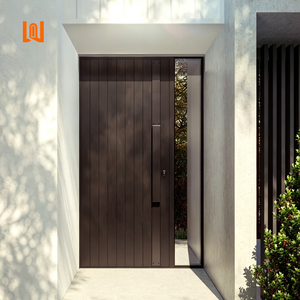
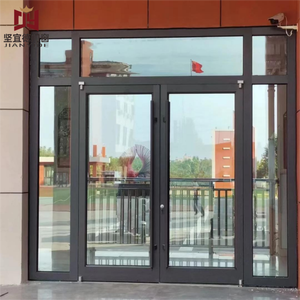
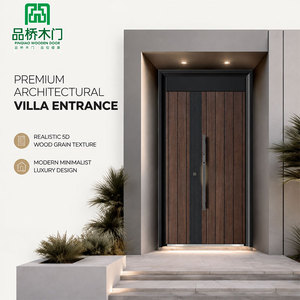
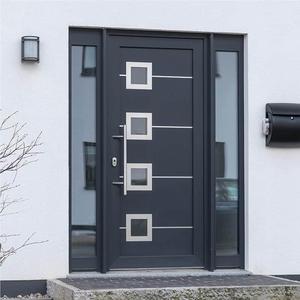
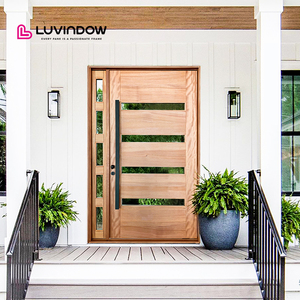
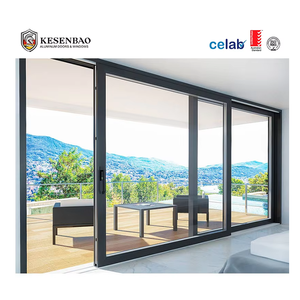
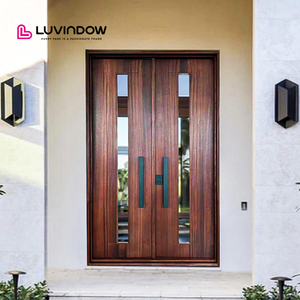
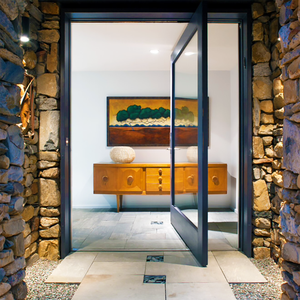
Fortor Security Door Co., Ltd. Manufacturing Ecosystem
Operating from a state-of-the-art 20,000㎡ industrial complex in Guangdong, China, Fortor integrates structural engineering, thermal break profile extrusion, CNC precision fabrication, and international testing compliance under one rigorous quality management system.
Aluminum Alloy Metallurgy & Extrusion
We utilize primary 6063-T5 and T6 structural aluminum billets with wall thicknesses ranging from 2.0mm to 3.0mm for entry doors. Tensile strength exceeds 160 MPa, delivering exceptional structural resistance against lateral wind pressure and forced entry attempts.
PA66-GF25 Polyamide Thermal Barriers
To eliminate thermal bridging, our thermal break systems incorporate 25% glass-fiber reinforced Polyamide (PA66-GF25) strips imported from Germany. This structural thermal break lowers total frame U-factors to as low as 0.18 BTU/h·ft²·°F (1.0 W/m²K).
Surface Finishing & Corrosion Testing
Finished with AkzoNobel PVDF fluorocarbon coatings, anodic oxidation Class 15, or Italian sublimated wood grain heat transfer. Tested against AAMA 2605 specifications, enduring 3,000+ hours of continuous salt spray testing for harsh coastal environments.
Comparative Engineering Analysis: Custom Aluminum vs. Traditional Entry Materials
Understanding the lifetime value, energy performance, and maintenance matrix across architectural door substrates for commercial and residential procurement decision-makers.
| Performance Criterion | Fortor Thermal Break Aluminum Entry Systems | Solid Hardwood Doors (Teak/Oak) | Hollow Metal / Commercial Steel Doors |
|---|---|---|---|
| Structural Integrity & Warp Resistance | Zero dimensional movement; immune to humidity, swelling, or fiber warping. | High expansion/contraction rate (up to 5%); prone to swelling, binding, and cracking. | High rigidity; susceptible to denting, seam separation, and oxidation rust over time. |
| Thermal Insulation (U-Factor Range) | 0.18 - 0.28 BTU/h·ft²·°F (Multi-cavity PA66 insulation + Argon IGU). | 0.30 - 0.45 BTU/h·ft²·°F (Dependent on timber density and grain structure). | 0.35 - 0.60 BTU/h·ft²·°F (Requires polyurethane foam core to avoid high thermal bridging). |
| Acoustic Isolation (STC Rating) | STC 38 to 44 dB (Dual EPDM gasket perimeter sealing + acoustic glass). | STC 30 to 35 dB (Limited by threshold drop seals and timber panel mass). | STC 32 to 38 dB (Dependent on internal core dampening material). |
| AAMA & Coastal Weather Testing | AAMA 2605 compliant PVDF coating; 3,000h salt spray resistance. Ideal for oceanfronts. | Requires re-varnishing/re-sealing every 12–18 months in UV/coastal climates. | Prone to internal rust creep if surface seal paint is scratched or cracked. |
| Hardware & Lock Compatibility | Supports automatic 5-point keyless electronic mortises, heavy-duty offset pivot hinges. | Limited load capacity for oversized heavy pivot mechanisms without sag. | Standard commercial mortise locks; limited aesthetic architectural hardware integration. |
| Service Life & Recyclability | 50+ Years service life; 100% infinitely recyclable aluminum alloy core. | 15–25 Years (Highly dependent on sun exposure and maintenance discipline). | 20–30 Years (Subject to environmental rust degradation). |
Future Procurement & Design Trends in Custom Aluminum Entry Doors
Key innovations shaping the international architectural hardware and entry system industry over the next decade.
1. Smart IoT Access & Biometric Integration
The global entrance door market is shifting rapidly from mechanical keys to integrated biometric access control ecosystems. Next-generation aluminum entry doors feature flush-mounted 10-inch capacitive touchscreens, 3D facial recognition algorithms, hidden motorized multi-point lock actuators, and real-time remote surveillance connected via Zigbee/Wi-Fi smart home automation protocols. Fortor leads this space with fully integrated wiring channels pre-milled during factory CNC profile processing.
2. Oversized Modern Pivot Entrances
Architects are specifying expansive entrance openings exceeding 3.0 meters in height and 2.0 meters in width. Traditional butt hinges cannot support the structural weight of large glass and aluminum panels without severe sagging. Future procurement trends favor high-capacity hydraulic offset pivot hinges embedded discreetly within the top transom and floor threshold, supporting panel weights up to 500 kg with zero-effort fingertip operation.
3. Passivhaus Standard Ultra-Low U-Value Glass
With global net-zero building regulations coming into force across Europe, North America, and Australia, entry doors must achieve Passivhaus-certified thermal standards. This requires triple or quadruple-pane insulated glass units (IGUs) filled with 90%+ Argon gas, featuring warm-edge composite spacers, dual Low-E coatings, and multi-cavity thermal break extrusions packed with aerogel or expanded polyurethane insulation.
4. High-Velocity Hurricane Zone (HVHZ) Impact Compliance
Extremely harsh weather events have heightened global demand for hurricane-impact entry systems, even outside traditional storm zones like Florida and the Caribbean. Procurement teams are specifying SGP (SentryGlas® Interlayer) laminated safety glass combined with heavy-gauge structural aluminum frames capable of resisting cyclic wind pressure loads exceeding ±70 PSF and direct missile impact testing (ASTM E1886/E1996 and Miami-Dade TAS 201/202/203).
Frequently Asked Questions (FAQ) for B2B Importers & Contractors
Detailed insights addressing custom production, lead times, export logistics, structural testing, and field support.
Is Fortor a direct manufacturer or an export trading intermediary?
What international building codes and test certifications do your doors support?
- North America: NFRC thermal performance rating (U-factor & SHGC), AAMA structural window/door performance standards, and Miami-Dade NOA style hurricane impact testing.
- Australia & Oceania: AS2047 (Windows and Doors in Buildings) for water penetration, air infiltration, and structural ultimate limit state pressure, as well as AS1288 glass glazing compliance.
- Europe & UK: CE marking compliance according to EN 14351-1 and PAS 24 security performance testing.
Can sizes, panel colors, glass configurations, and lock hardware be customized?
- Profiles: Custom thermal break depth (75mm, 80mm, 95mm, 120mm).
- Finishes: Custom RAL powder coat colors, fluorocarbon PVDF, anodized bronze/black, or 3D sublimated wood grain finishes.
- Glass: Double/triple pane, tempered safety glass, soundproof acoustic laminated, Low-E solar control, or privacy smart tint glass.
- Hardware: German Siegenia, Hoppe, GU, Dormakaba, or custom smart electronic lock hardware.
What exact technical information is needed to obtain a formal project quotation?
- Architectural elevation drawings or rough opening dimensions (Width × Height × Frame Depth).
- Required door swing direction or operation type (Inswing, Outswing, Sliding, Bi-Fold, or Offset Pivot).
- Glass spec requirement (e.g., 6mm Clear Tempered + 12Ar + 6mm Low-E Tempered).
- Target project city, climate condition, or necessary regional performance certificates.
- Estimated order volume and target destination seaport/delivery address.
How does Fortor prevent damage during international ocean freight transport?
- Each door leaf and frame profile is wrapped in a 5-layer protective polyethylene film and thick EPE foam corner guards.
- Fully assembled doors or knocked-down (KD) frames are packed inside non-fumigation IPPC-stamped solid plywood crates lined with waterproof plastic sheeting.
- Crate interiors feature internal wood bracing blocks to eliminate lateral movement during ocean container transit.