Featured Architectural Glass Entry Door Systems
Precision-engineered entrance solutions tested to NFRC, AS2047, CSA, and Miami-Dade hurricane standards. Directly manufactured and exported by Fortor Security Door Co., Ltd.
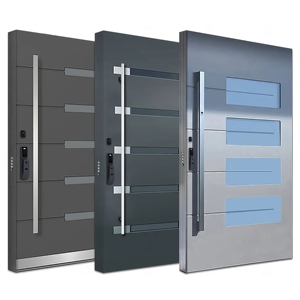
New Design Armoured Bulletproof & Explosion-Proof Entry Door
Engineered with high-tensile stainless steel frames, ballistic grade multi-layer PVB laminated security glass, and heavy-duty concealed pivots for high-end luxury villas.
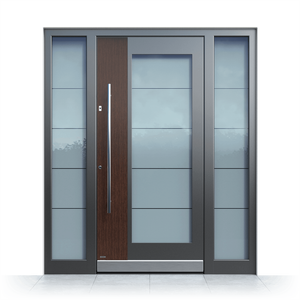
Modern Minimalist Waterproof Aluminum Security Swing Entry Door
Ultra-clean aesthetics featuring 6063-T6 thermal break profiles, perimeter EPDM weather sealing gaskets, and dual-pane Low-E tempered security glass.
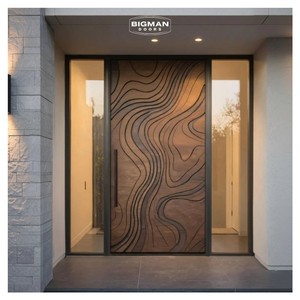
3D Carving Solid Wood & Glass Exterior Main Entrance Door
Combines 3D CNC-carved hardwood armor with integrated double-glazed insulating glass inserts for high-end residential estates, boutique hotels, and luxury villas.
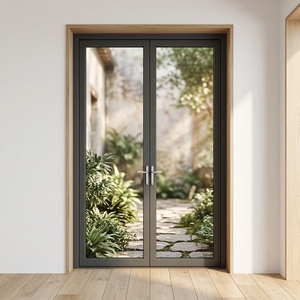
Double Glass Frameless Commercial Swing Door for Mall & Hotel
Commercial grade double-pane glass entry system engineered with concealed heavy-duty hydraulic floor springs and minimal perimeter aluminum framing.
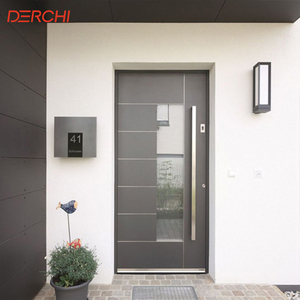
Exterior Thermal Aluminum Front Security Glass Entry Door
Multi-lock high-security exterior door with multi-chamber thermal break aluminum profiles, insulated Low-E glass panel, and optional smart biometric handle.
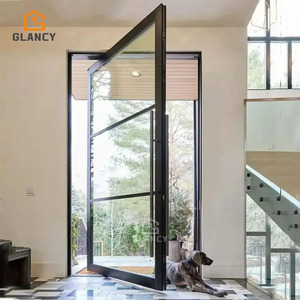
Oversized Modern Aluminum External Glass Pivot Door
Architectural grand entry pivot system supporting single panels up to 3000mm high and 500kg weight. Features magnetic floor drop seals and structural laminated glass.
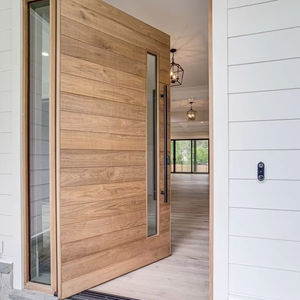
Custom Wood Frame Glass Entrance Pivot Front Door
Factory-direct engineered hardwood matrix fused with reinforced internal aluminum framing and double-laminated frosted or clear architectural safety glass.
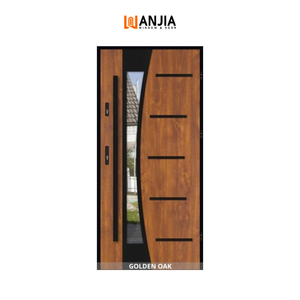
Wood Grain Finish Entry Security Door with One-Way Mirrored Glass
Combines the natural warmth of 3D vacuum thermal transfer wood finish on aluminum with reflective one-way mirror privacy glass for absolute privacy and high thermal resistance.
Enterprise Manufacturing Infrastructure & Export Authority
As a dominant force in China's fenestration and architectural entryway manufacturing sector, Fortor Security Door Co., Ltd. operates a modern 20,000-square-meter manufacturing complex in Guangdong, China. Backed by over 17 years of specialized R&D and precision engineering experience, Fortor stands as a premier OEM/ODM direct factory partner for international B2B buyers across 30+ countries including the United States, Canada, Australia, the United Kingdom, and the Caribbean region.
Unlike commercial trading intermediaries, Fortor retains complete, end-to-end operational control over the entire supply chain. From precision alloy extrusion cutting, CNC 5-axis profile machining, thermal break strip insertion, automated corner-crimping, silicone structural sealant injection, to trial assembly and export crating—every single step occurs inside our ISO9001-certified factory walls.
Global Compliance & Testing Rigor: Fortor glass entry door systems are certified and routinely audited against international fenestration benchmark standards. Our product lines meet and exceed performance specs for NFRC (National Fenestration Rating Council), AS 2047 (Australian Window & Door Standard), CSA (Canadian Standards Association), ENERGY STAR®, and Miami-Dade County Hurricane Impact Criteria.
Architectural & Technological Development Trends in Glass Entry Doors
The global entry door market is experiencing a profound paradigm shift. No longer viewed simply as passive security barriers, modern main entrance doors serve as central architectural centerpieces that define building energy envelopes, acoustics, smart home connectivity, and structural resilience. Below are the key technological breakthroughs driving the next generation of glass entry doors produced by China's leading exporters.
1. Multi-Cavity Polyamide Thermal Break Engineering
Replacing outdated single-bridge aluminum frames, advanced exporters utilize 24mm to 34mm PA66-GF25 (25% glass fiber reinforced polyamide) insulation bars filled with expanded polyurethane (PUR) foam. This reduces thermal conductivity across the frame to U-values under 0.20 Btu/h·ft²·°F.
2. Oversized Glass Paneling & Pivot Mechanics
Architects increasingly demand grand, multi-meter entrance pivot doors. High-end manufacturing leverages custom German-engineered concealed pivot hinges rated for loads up to 500kg, incorporating floor-recessed hydraulic damping and self-closing return systems.
3. High-Security Armor Lamination & Ballistics
Modern entrance glass combines 6mm+6mm or 8mm+8mm tempered low-iron glass with SentryGlas® (SGP) or multi-layer PVB interlayers. This achieves hurricane missile impact resistance (ASTM E1996/E1886) and forced-entry protection against heavy physical tool attacks.
4. Smart Access & Electrochromic Privacy Integration
Leading factories integrate biometric 3D facial recognition, motorized multi-bolt locking gears, and PDLC switchable smart glass into the door matrix—enabling instantaneous transition from crystal-clear transparency to 99% opaque privacy at a button press.
Future Procurement Trends for Overseas B2B Importers & Developers
For international commercial buyers, real estate developers, window/door distributors, and general contractors, understanding structural shifts in Chinese B2B exporting is essential to securing competitive advantage. Over the next five years (2025–2030), strategic sourcing will revolve around four core procurement directives:
1. Deep Customization & CAD/BIM Integration: Off-the-shelf standard sizes are rapidly losing market share. Importers now expect Chinese manufacturers to work directly from architect CAD (.DWG) elevation files and Building Information Modeling (BIM) software, producing fully bespoke opening dimensions, specialized glass coatings, custom powder-coat colors (RAL palette), and precise hardware pre-drilling.
2. Decarbonization & Embodied Carbon Accounting: European, North American, and Australian building codes are introducing stringent carbon targets. Global buyers prioritize suppliers using recycled low-carbon primary aluminum billet (smelted via hydroelectric power), non-toxic chrome-free passivation pretreatment, and VOC-free AkzoNobel fluorocarbon (PVDF) powder coatings.
3. Rigorous Supply Chain Transparency & Trial Assembly Verification: To eliminate costly job-site fitting failures abroad, top tier China exporters perform 100% pre-shipment trial assembly. Frame squareness, gasket tension, corner joint tolerances, and hardware operation are verified, recorded via HD video, and signed off prior to export crating.
4. Factory-Direct Modular Crating & Jobsite Logistics: Freight optimization has become a key cost driver. Future-ready exporters utilize heavy-duty plywood crates lined with waterproof membrane film, custom foam corner protectors, and steel banding. Products are packed according to site installation sequences (floor-by-floor or unit-by-unit) to minimize unloading labor costs at destination ports.
Technical Material & Performance Specification Matrix
To assist architects and procurement heads in writing accurate project specs, the matrix below highlights performance ranges achievable across Fortor's engineered glass entry door lines:
| Performance Index | Standard Commercial Grade | High-Performance Thermal Line | Ultra-Luxury Armor & Security Line |
|---|---|---|---|
| Aluminum Alloy Grade | 6063-T5 Architectural Profile | 6063-T6 High-Precision Thermal Profile | 6061-T6 Heavy Structural / 316 Stainless |
| Thermal Insulation (U-Factor) | 0.35 – 0.45 Btu/h·ft²·°F | 0.18 – 0.25 Btu/h·ft²·°F | 0.15 – 0.22 Btu/h·ft²·°F |
| Acoustic Rating (STC / OITC) | STC 32 / OITC 28 | STC 38 / OITC 34 | STC 42+ / OITC 38 (Triple Laminated) |
| Wind Load Resistance | 2.5 kPa (Class 4 / ASTM E330) | 4.5 kPa (Class 7 / Hurricane Rated) | 6.0+ kPa (Miami-Dade Impact Compliant) |
| Glazing Configuration | 5mm+12A+5mm Tempered Clear | 6mm Low-E + 16Ar + 6mm Low-E Double | 8mm+1.52SGP+8mm Laminated + 12Ar + 8mm |
| Surface Coating Spec | Standard Powder Coat (60 Micron) | PVDF Fluorocarbon 3-Coat (80 Micron) | 3D Vacuum Thermal Transfer Wood Grain |
| Locking & Security | 3-Point Latch Lock System | 5-Point Multi-Lock Gear System | 12-Point Heavy-Duty Armored Bolt Lock |
Frequently Asked Questions for Overseas B2B Sourcing
Answers to crucial technical, logistics, and compliance questions asked by overseas buyers prior to placing volume glass entry door orders.
Is Fortor Security Door Co., Ltd. a direct factory manufacturer or a trading company?
What international certifications and test reports do your doors possess?
How do you protect oversized glass entry doors during ocean transit?
Can we request fully customized sizes, glass specs, and custom extrusion profiles?
What information is required to obtain a binding technical proposal and price quote?
What is your standard production lead time for export orders?
How do you support installation for overseas buyers?
Ready to Elevate Your Architectural Project?
Connect with Fortor's engineering consultation team to receive complete CAD shop drawings, factory-direct wholesale pricing, and technical catalog specs within 24 hours.