Executive Industry Overview: Architectural Evolution of Villa Entrance Systems
Modern luxury residential architecture demands a seamless synthesis of security, thermomechanical performance, and aesthetic grandeur. As structural openings expand to accommodate grand mansion elevations, the entrance door has evolved from a simple mechanical barrier into a highly engineered architectural envelope component. Premium villa projects across North America, Europe, Australia, and the Caribbean require entrance systems capable of withstanding extreme climate pressures—ranging from high-velocity hurricane zones (HVHZ) to severe thermal freeze-thaw cycles—without compromising on zero-sightline aesthetic thresholds or modern automated convenience.
Choosing the ideal China-based manufacturing partner is pivotal for B2B importers, general contractors, commercial developers, and architectural firms. China's door and window manufacturing ecosystem, spearheaded by advanced facilities such as Fortor Security Door Co., Ltd. in Guangdong, integrates precision CNC profile machining, robotic welding, electro-chemical surface finishing, and rigorous third-party performance verification. This engineering white paper provides an exhaustive analysis of structural material selection, thermal-break dynamics, acoustic insulation, security rating compliance, and strategic procurement frameworks governing luxury entrance systems.
Critical Information Gain: Material Engineering Superiority
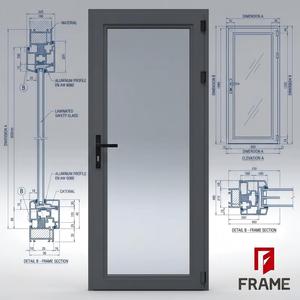
Architectural aluminum alloys such as 6063-T6, when coupled with polyamide 66 (PA66 GF25) thermal breaks and cast steel armored internal structural cores, deliver a strength-to-weight ratio 300% higher than traditional solid wood, while eliminating dimensional warping, frame binding, and moisture degradation in tropical or coastal environments.
Key Procurement Trends Shaping Global Villa Door Sourcing (2025–2030)
Global architectural trends indicate a decisive shift toward grand scale, energy decarbonization, and intelligent automation. B2B buyers evaluating China villa entrance door manufacturers must align their supply chains with the following macroeconomic and technological vectors:
1. Oversized Floor-to-Ceiling Pivot Systems
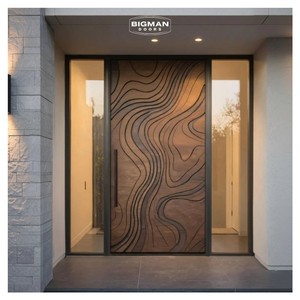
Luxury residential designs increasingly favor grand pivot entry doors exceeding 4 meters in height and 2 meters in width. Engineering these massive sashes requires heavy-duty German concealed hydraulic pivot hinges supporting loads up to 800kg with effortless push-pull kinematics and perimeter magnetic seals.
2. Multi-Layer Armored Security & Ballistic Protection
High-profile residential developments demand multi-hazard resilience. Modern entrance doors integrate internal cast steel armored core plates, anti-burglary multi-point gear-hook locking mechanisms, and bulletproof glass inserts rated to international UL 752 and EN 1063 standards.
3. Decarbonization & Ultra-Low U-Factor Compliance
With international building energy codes tightening (e.g., ENERGY STAR®, NFRC, Title 24, and AS 2047), thermal insulation is paramount. Dual and triple thermal breaks, argon-filled Low-E insulated glass units (IGU), and warm-edge spacers reduce overall door U-factors below 0.18 BTU/h·ft²·°F (1.0 W/m²K).
4. Smart Biometric & Mechatronic IoT Access
Conventional physical keys are being replaced by integrated motorized smart locking systems. Factory-fitted biometric 3D facial recognition, capacitive fingerprint sensors, encrypted RFID, and smart home IoT protocols (Zigbee, Z-Wave, Matter) allow secure, keyless entry with remote audit logs.
5. Severe Weather & Hurricane Impact Resilience
Projects located in coastal and tropical storm zones (such as Florida, the Caribbean, and Northern Australia) demand extreme wind load resistance and missile impact ratings. Laminated structural glass with SentryGlas® (SGP) interlayers ensures structural integrity under cyclic wind pressures exceeding ±90 PSF.
6. Advanced Fluorocarbon & Anodized Finishes
To resist UV degradation, salt-fog corrosion, and abrasive atmospheric pollutants, advanced factory finishing utilizes AkzoNobel or PPG Qualicoat Class 2/Class 3 fluorocarbon (PVDF) coatings, maintaining pristine surface color stability for over 25 years.
Technical Comparative Matrix: Entrance Door Material Engineering
To assist architects and procurement specialists in specifying the appropriate door typology, the table below provides a rigorous technical comparison of performance attributes across major entrance system structural configurations:
| Performance Criteria | Thermal Break Aluminum System | Cast Steel Armored Security System | Solid Wood / Engineered Core | Impact Arch Iron Glass System |
|---|---|---|---|---|
| Structural Load Resistance | Very High (6063-T6 Alloy) | Extreme (Bulletproof Armored) | Moderate (Prone to swelling) | High (Wrought Iron Frame) |
| Thermal Insulation (U-Factor) | 0.15 - 0.22 (PA66 Break + Argon) | 0.20 - 0.28 (Insulated Core) | 0.25 - 0.35 (Natural Timber) | 0.28 - 0.40 (Thermal Bridge Risk) |
| Acoustic Attenuation (STC) | STC 38 - 45 dB | STC 42 - 50 dB | STC 30 - 35 dB | STC 35 - 40 dB |
| Maintenance & Lifecycle | Zero Maintenance / 30+ Yrs | Low Maintenance / 30+ Yrs | High Maintenance (Repainting) | Periodic Rust Prevention |
| Max Sash Weight Support | Up to 800 kg (Pivot / Heavy Duty) | Up to 1000 kg (Armored Hinge) | Up to 250 kg (Standard Hinge) | Up to 450 kg (Heavy Duty) |
| International Compliance | NFRC, AS2047, CSA, CE, AAMA | EN 1627 RC3/RC4, UL 752 | Standard Residential Code | ASTM E1886 / E1996 Impact |
Manufacturing Excellence: Fortor Security Door Co., Ltd. Capabilities
When executing international procurement contracts, vendor authority, verifiable manufacturing scale, and quality control protocol determine project success. Fortor Security Door Co., Ltd. stands as a premier China-based manufacturer operating a specialized 20,000 square meter production complex in Guangdong, China. With over 17 years of dedicated engineering expertise, Fortor seamlessly manages profile extrusion processing, high-precision CNC milling, structural thermal break insertion, robotic surface treatment, automated glazing assembly, and rigorous pre-shipment quality verification.
Distinguishing itself from third-party export trading intermediaries, Fortor conducts 100% of fabrication in-house. This centralized operational structure guarantees strict adherence to shop drawings, complete material traceability, and fixed factory-direct pricing. Fortor's engineering systems are rigorously tested and certified under international testing regimes including NFRC (National Fenestration Rating Council), AS 2047 (Australian Standard for Windows and Doors in Buildings), CSA (Canadian Standards Association), and the ENERGY STAR® program.
Verified Factory Output & Project Execution Capabilities
With an annual manufacturing output exceeding 50,000 square meters and over 1,500 completed overseas projects, Fortor provides end-to-end B2B support—including CAD structural calculations, 3D BIM modeling, custom extrusion development, labeled export container packing, and dedicated site installation guidance.
Step-by-Step B2B Sourcing & Custom Fabrication Workflow
Procuring custom villa entrance doors from China requires a structured, fail-safe quality control workflow to ensure exact alignment with architectural blueprints and local municipal building codes:
Phase 1: Architectural Intake & Specification
The client submits structural elevation drawings, rough opening dimensions, wind pressure parameters, glass performance criteria (U-factor, SHGC, VLT), and security lock preferences. Fortor's engineering desk conducts a comprehensive feasibility analysis.
Phase 2: CAD Shop Drawing Approval
Detailed 1:1 scale shop drawings detailing profile cross-sections, anchor bracket locations, thermal break barrier placement, drainage weep holes, and hardware cutouts are issued for formal approval by the project architect or general contractor.
Phase 3: CNC Machining & Surface Coating
High-grade aluminum profiles (6063-T6) are cut and milled on 5-axis German CNC centers. Components undergo multi-stage chemical pretreatment followed by electrostatic powder coating or PVDF fluorocarbon baking in automated vertical spray booths.
Phase 4: Assembly & Pre-Shipment Inspection
Sashes, frames, multi-point locking gear, EPDM gasket seals, and insulated tempered glass panels are assembled. Every unit undergoes 100% pre-shipment trial installation, seal compression checks, and smooth operation testing.
Phase 5: Heavy-Duty Export Crating
Doors are wrapped in scratch-resistant protective film, encased in corner edge guards, and secured inside fully enclosed ISPM 15 compliant fumigated plywood crates to withstand ocean transit and multi-stage container handling.
Phase 6: Logistics & Technical After-Sales
Fortor coordinates CIF/DDP freight logistics to destination sea ports or direct to job sites. Comprehensive installation instruction manuals, video tutorials, and technical support ensure seamless installation on site.
Frequently Asked Questions (FAQ) for B2B Overseas Buyers
Addressing core technical, logistical, and commercial inquiries routinely raised by international procurement managers, real estate developers, and construction firms: