Featured OEM Coastal Aluminum Entry Door Systems
Custom-engineered profile configurations certified to international standards (AS 2047, NFRC, CSA, ENERGY STAR) for seaside villas, luxury resorts, and high-exposure commercial projects.
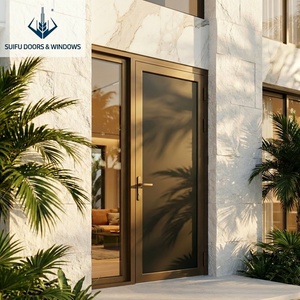
French Style Swing Front Entry Door AS2047 Double Glazed
- 6063-T6 Thermal Break Profile
- AS 2047 & NFRC Storm Compliant
- Marine EPDM Triple Gasket System
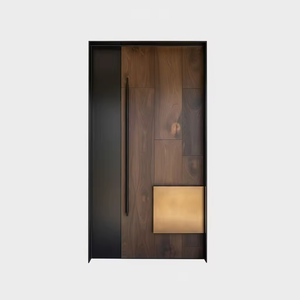
Luxury Modern Pivot Main Entrance Door with Digital Lock
- Heavy-Duty Floor Spring Pivot
- Integrated Smart Biometric Locking
- AAMA 2605 Powder Coating
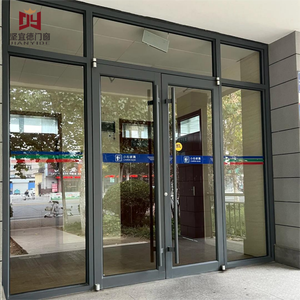
Heavy Duty Commercial Windproof Shopfront Entrance Door
- Reinforced 3.0mm Profile Wall
- High Traffic Overhead Closer
- Insulated Low-E Glass Assembly
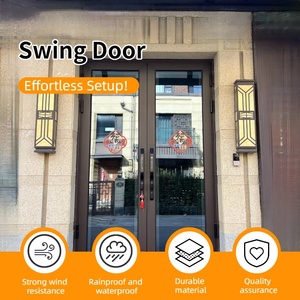
Modern Minimalist Hurricane-Resistant Coastal Entry Door
- SGP Laminated Safety Glass
- Multi-Point Stainless Steel Locks
- DP70 Wind Pressure Rating
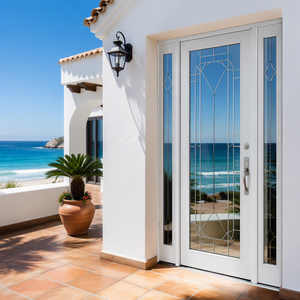
Mediterranean White Aluminum Lattice Villa Security Entry Door
- Decorative Architectural Lattice
- Salt Spray Resistant Finish
- Water-Tight Low Threshold Design
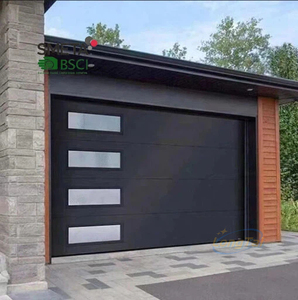
Coastal Weatherproof Heavy Duty Aluminum Garage Entry Door
- High-Impact Panel Structure
- UV-Stabilized Powder Coating
- Reinforced Wind-Load Locks
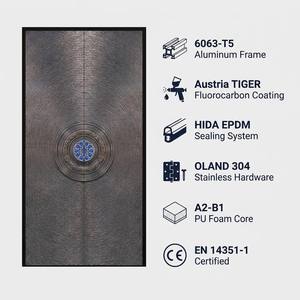
Salt Spray Resistant Tropical Beach House Entry Door
- 3,000+ Hr Salt Spray Tested
- Anodized Architectural Finish
- Thermal Break Energy Saver
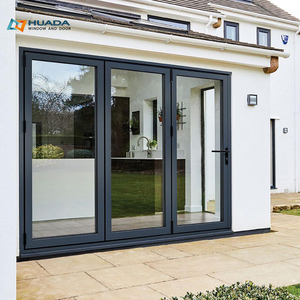
Luxury Coastal Villa Double French Exterior Entrance Door
- Double Insulated Argon Glass
- High Structural Load Capacity
- Seamless Threshold Drainage
Engineering Excellence in OEM Coastal Aluminum Entry Door Manufacturing
Coastal architectural environments present the most severe naturally occurring challenges for exterior building envelopes. Structures situated within 5 miles of salt-water oceanfronts are subjected to continuous marine atmospheric stress: high-concentration airborne sodium chloride (NaCl) aerosol deposition, persistent relative humidity exceeding 75%, cyclic thermal expansion, high solar ultraviolet (UV) radiation, and extreme aerodynamic force loads driven by coastal windstorms and tropical cyclones. Selecting an OEM manufacturer for custom coastal aluminum entry doors requires an in-depth evaluation of metallurgy, surface chemistry, glass panel lamination, structural thermal isolation, and system sealing.
Information Gain Benchmark: Standard architectural aluminum profiles degrade rapidly in C5-M marine corrosive zones without specialized alloying and surface treatments. Custom OEM engineering must integrate 6063-T6 or 6061-T6 structural aluminum with AAMA 2605 fluoropolymer coatings and Polyamide PA66 GF25 thermal breaks to guarantee 25+ years of structural integrity.
1. Metallurgy & Alloy Profile Architecture
The foundation of long-term mechanical reliability in oceanfront door systems lies in profile metallurgy. Fortor Security Door Co., Ltd. utilizes primary 6063-T6 and 6061-T6 magnesium-silicon aluminum extrusions featuring profile wall thicknesses ranging from 2.0mm to 3.5mm. Unlike recycled secondary aluminum alloys containing iron impurities that trigger internal galvanic micro-corrosion, virgin primary billets yield superior tensile strength (yield strength ≥ 170 MPa) and high resistance to stress corrosion cracking under cyclic wind pressure.
2. C5-M Marine Coating Chemistry & ASTM B117 Testing
Untreated aluminum exposed to salt air quickly develops pitting corrosion and filiform oxidation under paint layers. To prevent surface degradation, custom OEM doors manufactured for coastal applications must undergo a rigorous multi-stage surface pretreatment followed by electrostatically applied AAMA 2605-compliant 70% Polyvinylidene Fluoride (PVDF) fluoropolymer coatings or advanced marine-grade anodizing (anodic film thickness ≥ 25 microns). This coating specification withstands continuous salt spray testing under ASTM B117 standards for over 3,000 to 5,000 hours without blistering, cracking, or color fading.
3. High-Velocity Hurricane Zone (HVHZ) Impact & Wind Pressure Resistance
Coastal entry doors frequently serve as the primary defensive barrier against windborne debris during severe storm events. OEM doors engineered by Fortor are tested to withstand Design Pressure (DP) ratings from DP50 up to DP90+ (equivalent to wind velocities exceeding 180 mph / 290 km/h). Structural glazing utilizes heavy-duty laminated safety glass featuring SentryGlas® (SGP) ionoplast interlayers, which provide 5 times the tear strength and 10 times the stiffness of traditional PVB interlayers. Even if the outer tempered glass fracture occurs under severe projectile impact, the SGP composite panel remains structural within the aluminum frame, preventing interior building depressurization.
| Performance Standard | Standard Commercial Entry Door | Fortor OEM Coastal Aluminum Door | Architectural Impact Benefit |
|---|---|---|---|
| Aluminum Alloy & Temper | 6063-T5 (1.4mm - 1.6mm) | 6063-T6 / 6061-T6 (2.0mm - 3.5mm) | Prevents structural deflection under high wind loads |
| Salt Spray Resistance (ASTM B117) | 500 - 1,000 Hours (Standard Powder) | 3,000 - 5,000+ Hours (AAMA 2605 PVDF) | Eliminates filiform corrosion and salt pitting |
| Design Pressure (DP Rating) | DP30 - DP40 (Standard Residential) | DP50 - DP90+ (HVHZ Compliant) | Warranted against hurricane-force wind loads |
| Thermal Insulation (U-Factor) | U-Factor ≥ 0.55 BTU/h·ft²·°F | U-Factor ≤ 0.24 BTU/h·ft²·°F (PA66 Struts) | Blocks tropical solar heat & prevents condensation |
| Air & Water Infiltration Seal | Single Rubber Gasket / Brush Seal | Triple EPDM Vulcanized Gasket System | Blocks driving rain infiltration during coastal storms |
4. Thermal Isolation & Polyamide PA66 GF25 Strut Technology
Coastal entry doors in tropical or humid climates face extreme temperature differentials between intense outdoor solar heat and interior air conditioning. Un-insulated aluminum acts as a thermal conductor, resulting in heat gain and interior perimeter glass condensation. Fortor integrates precision-engineered Polyamide PA66 GF25 (25% glass-fiber reinforced) thermal break struts. These non-conductive barriers physically decouple the exterior aluminum frame from the interior profile, lowering overall U-factors down to 0.24 BTU/h·ft²·°F (1.36 W/m²K) and boosting energy efficiency in compliance with NFRC and ENERGY STAR thresholds.
Fortor Security Door Co., Ltd. — Enterprise Advantages & OEM Capability
As a vertically integrated door and window manufacturer with over 17 years of specialized manufacturing experience, Fortor Security Door Co., Ltd. operates a modern 20,000 square meter factory base in Guangdong, China. We specialize in contract OEM/ODM manufacturing for B2B importers, project developers, general contractors, and architectural hardware distributors in over 30 countries across North America, Australia, Europe, and the Caribbean.
20,000㎡ Production Base
Equipped with advanced CNC profile cutting centers, automated corner punching machines, and continuous glass glazing lines delivering an annual output exceeding 50,000+ m².
Certified System Standards
Products are tested and compliant with Australian AS 2047, North American NFRC, CSA, ENERGY STAR, and AAMA criteria to meet stringent local building codes.
Custom CAD & BIM Submittals
Our in-house engineering design team provides complete 2D CAD elevation drawings and 3D BIM models for rapid architect approvals and project tendering.
100% Mock-up Assembly
Every custom OEM order undergoes 100% pre-shipment frame assembly, squareness alignment, diagonal check, and hardware cycle testing prior to export packaging.
Protected Export Packing
Extrusions are protected with blue anti-scratch film, corner guards, plastic wrapping, and fully enclosed wooden crates to eliminate transit damage during ocean freight.
Global Service & Showrooms
Supported by regional partners and showrooms in the United States (Hayward, California), Canada, Australia, and Jamaica, providing local technical service and project consultation.
Future Sourcing & Architectural Development Trends in Coastal Entry Doors
As global architectural preferences evolve and environmental regulations tighten, commercial real estate developers, custom villa builders, and B2B door importers must align their procurement strategies with emergent technological trends. Over the next decade, coastal entrance door manufacturing will be reshaped by five critical innovations:
Trend 1: Hyper-Slim Profile Systems with Heavy-Duty Hidden Pivot Hardware
Modern luxury architectural design demands maximized glass daylight openings and minimal visible framing. Traditional heavy wide-frame doors are increasingly replaced by slim-sightline aluminum pivot doors capable of supporting panel weights up to 500 kg (1,100 lbs). The technological breakthrough lies in recessed hydraulic floor springs and top pivot pins manufactured from 316-marine-grade stainless steel, combining sleek aesthetic minimalist lines with high wind load resistance.
Trend 2: Electrified Multi-Point Smart Locking & IoT Access Integration
High-end residential and hospitality developments in coastal resort areas are transitioning from mechanical keyways to fully integrated electronic access control. OEM manufacturers are incorporating IP67-rated waterproof biometric fingerprint scanners, facial recognition cameras, and motorized multi-point automatic deadbolts directly into the aluminum door stiles. These systems communicate with home automation networks while maintaining physical burglar resistance up to European RC3 / WK3 standards.
Trend 3: Ultra-Low SHGC Solar Control & Vacuum Insulated Glass (VIG)
Coastal regions often experience high annual solar irradiation. Future procurement mandates focus on minimizing solar heat gain coefficient (SHGC) without sacrificing optical clarity. Next-generation OEM door orders are moving from standard double glazing to triple-glazed low-E insulated glass units (IGUs) incorporating Vacuum Insulated Glass (VIG) technology. VIG provides thermal insulation equivalent to solid masonry walls while significantly reducing total sash thickness and weight.
Trend 4: Circularity & Low-Carbon Recycled Aluminum Procurement
International environmental standards (such as LEED v4.1 and BREEAM) are driving strict carbon accounting across global supply chains. B2B importers and project tenders increasingly mandate low-carbon primary aluminum billets produced using hydroelectric power or profiles containing over 75% post-consumer recycled aluminum. Adopting certified green profiles allows developers to achieve net-zero building certifications.
Trend 5: Modular Pre-Glazed Sub-Frame Delivery Models
On-site skilled labor shortages in markets like the United States, Australia, and Europe have increased installation costs significantly. B2B buyers are seeking OEM manufacturers that provide factory-assembled, pre-glazed, and pre-hung door sub-frame units. Pre-engineered sub-frames with integrated waterproofing flanges reduce field installation labor by up to 60% and ensure factory-quality seal alignment.
Comprehensive B2B Buyer Procurement FAQ
Essential guidance for commercial importers, architects, project contractors, and wholesale distributors sourcing custom OEM coastal aluminum entry doors from Fortor Security Door Co., Ltd.