Certified Custom OEM Exterior Door Portfolio
Explore precision-engineered exterior door solutions manufactured to strict international standards for B2B commercial and high-end residential developments.
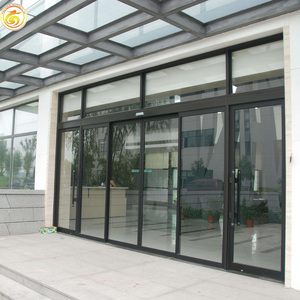
Hurricane Impact Resistant Storefront Doors With Decorative Grilles for Coastal Commercial Buildings
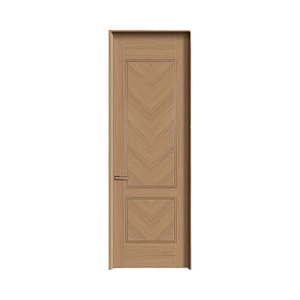
Modern Wooden Entrance Door for Villas & Hotels Aluminum Wood Composite Front Lobby Door Interior Security Finished Surface
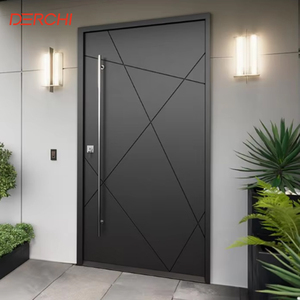
TOP Selling Residence Main Entrance Security Aluminum Front Entry Door Villa Entrance Door House Doors
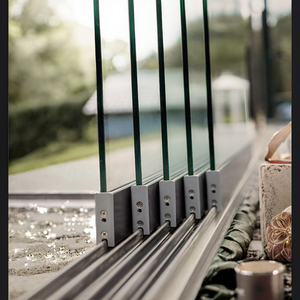
Modern Frameless Sliding Glass Doors Stacking Aluminum Alloy Manual Fiberglass For Bedroom Bathroom Outdoor Use
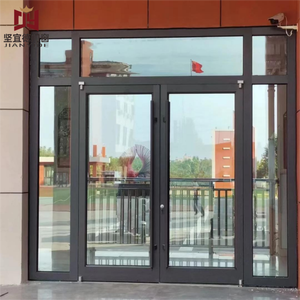
Commercial KFC Style Modern Outdoor Aluminum Double Glass Entry Door For Supermarket
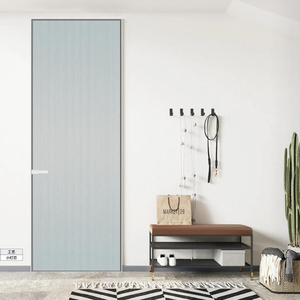
Anti-Corrosion Wood Grain Finish Aluminum Glass Door Low Threshold Entry Door Waterproof Soundproof Bedroom Coastal Villa Design
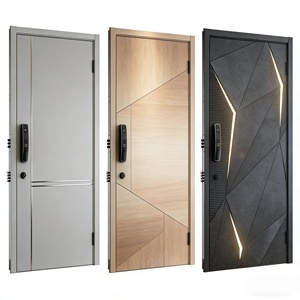
Modern Aluminum Security Door Residential Front Entrance Strong Outdoor Protection System Contemporary Minimalist Design
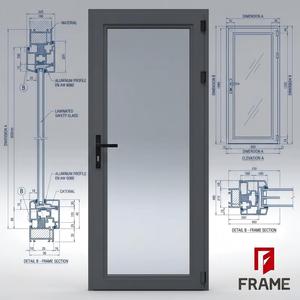
High Quality Aluminium Door Single Double Glass Indoor Single Casement Swing External Or Internal Doors
Manufacturing Competence & Industrial Capacity
Fortor Security Door Co., Ltd. — Operating a 20,000㎡ Advanced Extrusion & Fabrication Facility in Guangdong, China
In the high-stakes global building materials sector, qualifying custom OEM exterior door manufacturers requires evaluating technical depth, quality control governance, and export engineering capability. Fortor Security Door Co., Ltd. operates as a specialized direct manufacturer, engineering high-performance aluminum door systems, thermal break structural frames, and heavy-duty entry systems for international B2B buyers across 30+ countries including the United States, Canada, Australia, the United Kingdom, and the Caribbean.
Unlike trading intermediaries, our integrated fabrication ecosystem controls profile cutting, CNC milling, corner crimping, glass glazing, hardware installation, and rigorous structural testing under one roof. Our system solutions are engineered to solve climate-specific structural challenges, such as coastal hurricane force wind pressures, extreme solar thermal expansion, and heavy precipitation water penetration.
Certified Structural Compliance
Our architectural door systems are tested against NFRC, AS 2047, CSA, and ENERGY STAR program criteria. We supply full test documentation to facilitate regional building permit approval and commercial tender submissions.
End-to-End OEM Customization
From custom extrusion die development to specialized architectural finishes (powder coating, anodizing, wood-grain sublimation, and PVDF fluorocarbon), every assembly is fabricated strictly according to your architectural shop drawings.
Protected Export Logistics
Products undergo 100% pre-assembly inspection, structural squareness alignment checks, and are encased in multi-layer protective packaging with steel-reinforced wooden crates optimized for ocean container transit.
Global Procurement Trends in Architectural Exterior Doors (2025–2030)
Strategic industry insights for real estate developers, commercial contractors, and fenestration distributors navigating changing building codes and thermal efficiency standards.
The global market for custom OEM exterior doors is undergoing a structural transition driven by stringent energy efficiency directives, rising climate volatility, and demand for contemporary minimalist aesthetic profiles. B2B buyers sourcing custom exterior entrance systems must align their procurement strategies with several overarching technical developments:
1. High-Velocity Hurricane Zone (HVHZ) & Impact Resilience
Extreme coastal weather events have accelerated demand for laminated hurricane impact glass and structurally reinforced aluminum frames. Importers in the Caribbean, Florida, and coastal Australia now mandate Design Pressure (DP) ratings exceeding DP60 to DP90, requiring structural interlayers (SGP/PVB) capable of enduring missile impact tests and cyclical wind loads.
2. Ultra-Low U-Factor Thermal Break Systems
Building energy mandates, such as Energy Star 7.0 in North America and stringent U-value limits in Europe and Canada, have made traditional non-thermal aluminum obsolete. Modern procurement prioritizes polyamide PA66 thermal barrier struts, multi-cavity profile designs, and warm-edge spacer technology capable of achieving system U-factors below 1.2 W/m²K.
3. Ultra-Slim Sightlines with Concealed Structural Support
Architectural trends heavily favor floor-to-ceiling glass fenestration with minimal visible framing. OEM manufacturing now relies on high-tensile 6063-T6 aluminum alloys that maintain structural integrity while reducing sightline widths to under 30mm for sliding doors, supported by concealed heavy-duty stainless steel rollers.
4. Smart Biometric & Mechatronic Access Integration
Commercial lobby entryways and modern villa entry doors are shifting from mechanical keyways to integrated mechatronic multi-point locks. OEM factories must pre-wire internal profile raceways to house biometric fingerprint readers, facial recognition modules, motorized multi-point latches, and smart building automation protocols.
Engineering & Material Innovation in Custom Door Manufacturing
A technical breakdown of raw material metallurgy, surface treatments, acoustic dampening, and custom OEM extrusion workflows.
Metallurgical Superiority: 6063-T6 Extrusions vs Standard Alloys
The structural performance of a commercial exterior door relies fundamentally on extrusion alloy quality. Fortor utilizes prime 6063-T6 grade aluminum billets, delivering superior yield strength (≥170 MPa) and tensile strength (≥205 MPa) compared to commercial-grade recycled scrap. This ensures dimensional stability under heavy wind load displacement and prevents frame sagging on oversized entry doors reaching heights of up to 4.5 meters.
| Technical Parameter | Standard Commercial Aluminum Door | Fortor OEM Architectural Grade Exterior Door | Engineering Benefit |
|---|---|---|---|
| Alloy Matrix | Recycled 6063-T5 (Uncertified) | Virgin 6063-T6 Structural Alloy | 30% Higher Wind Pressure & Torsional Resistance |
| Thermal Insulation | Single Cavity PVC Strip (14.8mm) | Multi-Cavity PA66GF25 Polyamide (24mm–34mm) | Prevents Condensation & Lowers HVAC Energy Loads |
| Surface Treatment | Standard Electrostatic Powder Coating | AkzoNobel / PPG Fluorocarbon PVDF (>40 Microns) | Resists Salt Spray Corrosion & UV Fading for 20+ Years |
| Glazing Specification | Single / Double Standard Annealed Glass | Double / Triple Low-E Argon Tempered or Laminated | Optimized SHGC, Soundproof STC 40+, Impact Safety |
| Weather Sealing | Low-Grade PVC Rubber Gaskets | Co-extruded Continuous EPDM Foam Gasket Seals | Zero Air Infiltration (ASTM E283) & Water Tightness |
Custom OEM Manufacturing Workflow: From Drawing to Container
Sourcing custom exterior doors requires absolute precision during technical sign-off. Our streamlined 6-stage engineering protocol eliminates mismatch risks between architectural openings and fabricated assemblies:
Architectural Elevation & Opening Audit
Review of CAD elevation drawings, wind load requirements (KPa), rough opening dimensions, and local compliance standards.
Shop Drawing Engineering Sign-Off
Generation of detailed 1:1 cross-section shop drawings specifying extrusion wall thickness, thermal breaks, drainage channels, and glass specs.
Precision CNC Extrusion & Milling
Automated profile cutting, CNC lock slotting, corner key crimping, and pressurized corner sealant injection for absolute frame rigidity.
Glazing & Hardware Integration
Installation of certified insulated glass units (IGUs) with double-sealed EPDM gaskets and multi-point security locking systems.
Factory Trial Assembly & Quality Check
100% full-scale frame assembly, diagonal tolerance verification (≤1.5mm), hinge load testing, and smooth operation validation.
Heavy-Duty Crating & Export Logistics
Shrink-wrapping, foam corner protection, ocean-grade plywood crating, and container loading optimization.
Frequently Asked Questions for Custom OEM Exterior Door Buyers
Comprehensive answers addressing technical specifications, MOQ requirements, international testing compliance, and global shipping logistics.
Ready to Source Custom OEM Exterior Doors for Your Next Project?
Connect directly with Fortor's engineering team to review drawings, request technical test reports, and receive competitive factory-direct pricing.