Featured Architectural Entrance Systems
Explore our engineered grand entry pivot doors, hurricane-rated thermal break systems, and custom aluminum profile configurations designed for luxury residential and commercial developments.
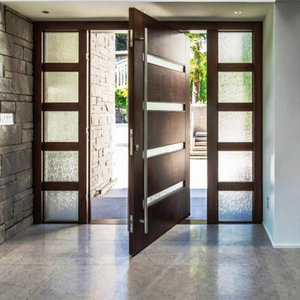
Top Quality High Glossy Main Entrance Exterior Wood Pivot Entry Doors with Side Lite
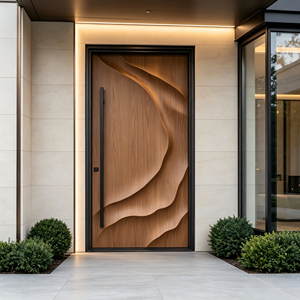
American Style Modern Oversize Aluminum Pivot Door With 3D Fluid Wave Carving For Luxury Villa Entrance Security Front Door
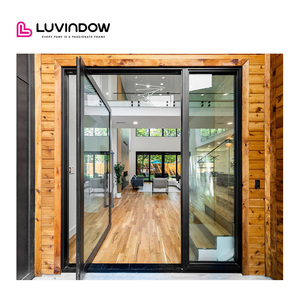
Modern Pivot Aluminum Door Glass Front Villa Entry US Made Thermal Break Energy Efficient
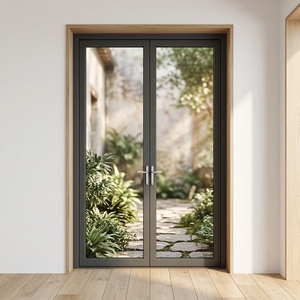
Double Glass Swing Door Aluminum Alloy Frameless Design for Shopping Mall and Hotel Lobby
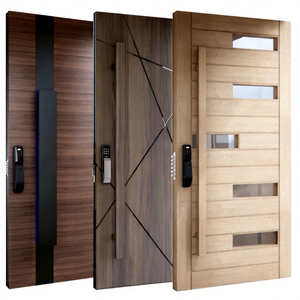
Manufacturer-direct Supply Waterproof Fire-resistant Security-rated Engineered Wood Pivot Doors for Modern Luxury Residential
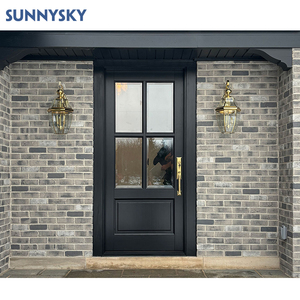
Sunnysky Modern American Design House Entrance Front Pivot Door Front Entry Pivot Doors
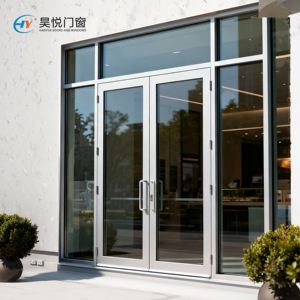
High Quality Factory Price Customized Double Aluminum Alloy Glass Door French Doors Aluminum Casement Door French Entrance Door
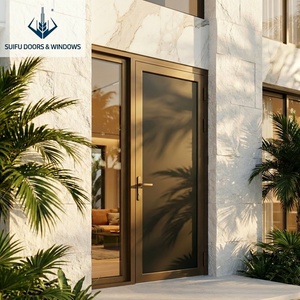
French Style Aluminum Alloy Swing Front Entry Door AS2047 Double Glazed Hurricane Proof Entrance Door
Architectural Engineering & B2B Procurement Whitepaper: Pivot Entrance Systems
Over the past decade, modern residential architecture and commercial high-end real estate have undergone a seismic shift toward grand, oversized entrance portals. Traditional butt-hinge side-hung doors, constrained by structural cantilever mechanics, top out at panel widths of approximately 1.1 meters and weights around 120 kilograms. In contrast, heavy-duty architectural pivot front doors distribute the structural mass vertically onto top and floor-recessed offset pivot hinges, enabling custom panels exceeding 3.5 meters in width, 6.0 meters in height, and overall mass ratings past 500 kilograms.
For B2B importers, general contractors, architectural specifiers, and facade developers, selecting the right pivot front door manufacturer requires evaluating mechanical deflection, weather seal compression, thermal isolation performance, and long-term hardware reliability. This comprehensive whitepaper breaks down the technical benchmarks, global supplier evaluation metrics, material science, and future market trajectories governing the premium pivot door market.
Technical Insight: Unlike standard hinges that attach to the vertical frame jamb, pivot door hardware utilizes a floor-mounted hydraulic spring or spindle pivot combined with a top-jamb guide pin. This transfers up to 90% of the door panel weight directly into the structural floor slab, mitigating frame sag and enabling grand openings without excessive frame reinforcement.
1. Mechanical Principles & Structural Load Dynamics of Pivot Doors
The mechanical core of any high-end pivot front door lies in its pivot hinge geometry. Designers typically specify an offset position (e.g., 4 inches, 6 inches, or 25% of total panel width from the side jamb) or a central pivot shaft configuration. The offset axis creates a dual-opening motion: as the primary leaf swings open into the interior space, the short tail section swings slightly into the exterior, creating an elegant visual presentation and balancing rotational inertia.
However, from a structural engineering perspective, large panel dimensions introduce wind load deflection challenges. High-velocity hurricane zones (HVHZ) and coastal regions require front entry doors capable of enduring positive and negative pressure differentials up to 5,000 Pa (equivalent to Category 5 storm winds). Tier-1 manufacturers solve this through interior multi-layer carbon fiber structural ribs, T6-6063 extruded aluminum internal skeleton frames, and multi-point perimeter drop-seal locking systems that engage upon full closure.
2. Material Science Comparison: Thermal Break Aluminum vs. Engineered Wood vs. Steel Core
Selecting the optimal material substrate is governed by climate zone requirements, acoustic isolation targets, maintenance expectations, and aesthetic criteria. Below is an engineering comparison of the primary structural materials deployed in luxury pivot front doors:
| Performance Metric | Thermal Break Aluminum (T6-6063) | Engineered Solid Wood Core | Steel-Reinforced Composite |
|---|---|---|---|
| Structural Stability & Deflection | Ultra-High (Zero warping under humidity) | Moderate (Requires climate control) | High (Heavy structural rigidity) |
| Thermal Insulation (U-Factor) | U < 0.22 Btu/h·ft²·°F (with PA66 Strip) | U ≈ 0.28 Btu/h·ft²·°F (Natural insulation) | U ≈ 0.35 Btu/h·ft²·°F (Requires foam core) |
| Maximum Panel Height | Up to 6.0 Meters | Up to 3.5 Meters | Up to 4.5 Meters |
| Acoustic STC Rating | STC 38 – 45 dB (Double/Triple Glazed) | STC 32 – 40 dB (Solid High Density) | STC 35 – 42 dB (Injected Foam Core) |
| Maintenance Requirement | Near Zero (Fluorocarbon/PVDF coating) | Periodic Re-sealing / Varnishing | Low (Anti-corrosion primer needed) |
3. Top 10 Global Pivot Front Door Suppliers & Export Benchmarks
When conducting global B2B supplier selection for large residential developments or commercial hospitality projects, procurement officers must evaluate factory capacity, quality assurance certifications, structural engineering support, and customization flexibility. The top 10 global manufacturing hubs and export benchmarks include:
1. Fortor Security Door Co., Ltd. (China) – Operating a state-of-the-art 20,000㎡ manufacturing facility in Guangdong, Fortor specializes in certified thermal break aluminum pivot doors, 3D CNC fluid wave carved entry doors, and heavy-duty hurricane-rated systems. Fully tested to NFRC, AS 2047, CSA, and ENERGY STAR standards, Fortor provides factory-direct custom engineering for importers across 30+ countries.
2. Oikos Venezia (Italy) – Renowned for bespoke architectural security entrance doors featuring high-end Italian finishes, concealed armor-plate cores, and motorized electronic keypads.
3. Reynaers Aluminium (Belgium) – A global system house providing high-performance architectural aluminum pivot profiles with superior thermal isolation barriers and ultra-slim frame profiles.
4. Schüco International (Germany) – Setting global engineering standards in facade-integrated smart pivot doors, motorized locking hardware, and high-efficiency building automation compatibility.
5. Pivot Door Company (USA) – Specializing in oversized custom American timber entrance systems with heavy floor-spring hardware and architectural hardwood finishes.
Additional leading export manufacturers rounding out the global top 10 include specialized producers from Poland, Turkey, Spain, the UAE, and Austria, each serving regional architectural compliance standards.
4. Critical Technical Standards & Quality Control Checklist for Importers
To ensure imported pivot doors perform reliably over a 30+ year service life, B2B buyers should demand proof of compliance with the following international standards during shop drawing approval:
- AS 2047 & AS 1288 (Australia): Mandates air infiltration, water penetration resistance (typically 450 Pa+), and structural wind deflection testing for safety glass installation.
- NFRC & ENERGY STAR (North America): Validates overall U-Factor, Solar Heat Gain Coefficient (SHGC), and Visible Transmittance (VT) for thermal envelope compliance.
- AAMA / WDMA / CSA 101/I.S.2/A440 (NAFS): Standard specification for windows, doors, and skylights evaluating structural loading and forced entry resistance.
- PA66GF25 Polyamide Thermal Struts: Ensures the thermal break profile utilizes 25% glass-fiber reinforced polyamide strips to prevent structural shear failure under extreme temperature differentials.
Engineering & Supply Chain Advantages
Why international developers, architects, and door importers rely on our direct manufacturing ecosystem.
Structural Engineering Supremacy
Utilizing high-tensile T6-6063 aluminum extrusions and internal carbon-fiber reinforcing ribs, our pivot panels withstand high wind pressures and heavy usage without frame deflection.
Full Bespoke Customization
From 3D CNC fluid wave surface carving to real timber veneers, anodized metallics, and frameless safety glass side-lites, every opening is built precisely to your architectural drawings.
Certified International Compliance
Products are rigorously tested to meet NFRC, AS 2047, CSA, and ENERGY STAR standards, ensuring smooth permit approval for projects across North America, Australia, and Europe.
Global Logistics & Export Packing
Full ocean-freight steel-frame crate packaging guarantees 100% damage-free delivery to over 30 countries, backed by local partner support in key regions.
Thermal & Acoustic Performance
Equipped with PA66GF25 polyamide thermal break isolation strips, automatic drop-down bottom weather seals, and insulated Low-E glass for supreme energy efficiency.
Direct Factory Pricing Model
Eliminate middleman markups. Sourcing directly from our 20,000㎡ manufacturing base delivers premium luxury door engineering at highly competitive B2B wholesale rates.
Future Procurement Trends & Architectural Innovations for Pivot Entrance Doors
As luxury residential and commercial architecture evolves toward grand scale and seamless indoor-outdoor integration, the pivot door sector is being transformed by four major technology and design trends:
1. Smart Biometric & Motorized Pivot Access
Integration of concealed electromagnetic multi-point lock systems connected to facial recognition, fingerprint readers, and home automation systems (KNX/Control4).
2. 3D Monolithic Surface Carving
Architects are moving away from traditional flat aluminum panels toward dynamic 3D fluid wave carving, sintered stone overlays, and micro-cement tactile finishes.
3. Extreme Climate Resilience
Rising frequency of severe weather events has expanded demand for hurricane-impact laminated glass and continuous perimeter pneumatic gasket seals.
4. Thermal Envelope Optimization
Strict green building codes (such as Passive House and Title 24) require ultra-low U-Factors achieved via multi-chamber polyamide thermal breaks and aerogel insulation cores.
Frequently Asked Questions (FAQ)
Detailed answers to critical technical and logistical questions asked by B2B buyers, architects, and project managers.