Executive Architectural Overview: Next-Generation Aluminum Entrance Systems
Technical analysis on material physics, thermal isolation structural integrity, and global procurement criteria for high-end residential and commercial developments.
In modern high-end residential architecture and luxury commercial developments, the exterior entrance door serves far beyond a basic security barrier; it operates as the structural, thermal, and architectural centerpiece of the building envelope. As global building codes demand elevated energy conservation, superior acoustic dampening, and resistance against severe climate phenomena, structural engineering has shifted dramatically away from legacy solid timber and uninsulated hollow steel doors toward extruded 6063-T6 architectural aluminum alloy entrance systems.
As a leading China premium aluminum entry door manufacturer, engineering expertise dictates that structural reliability relies upon precise profile design, advanced thermal break technology, multi-point kinetic locking hardware, and high-performance weatherproofing gasket seals. Thermally broken aluminum entry doors utilize structural Polyamide (PA66-GF25) thermal struts engineered with 25% glass fiber reinforcement. This structural decoupling prevents thermal bridge transmission between exterior ambient conditions and indoor microclimates, achieving U-factors as low as 0.22 W/m²K when combined with argon-filled, double- or triple-pane Low-E insulated glass units (IGUs).
Furthermore, structural wind load performance demands rigorous testing. Modern high-rise and coastal villa projects routinely specify doors compliant with NFRC, AS 2047, CSA, and ASTM hurricane impact criteria. By incorporating reinforced internal steel armatures within extruded aluminum profile cavities, premium Chinese door manufacturers deliver entrance solutions capable of withstanding design pressures exceeding 5,000 Pascals (equivalent to Category 5 hurricane wind speeds), without structural deformation or water ingress.
Curated Premium Aluminum Entry Door Series
Factory-direct structural aluminum entrance configurations engineered for luxury villas, multi-family residences, and modern architectural projects.
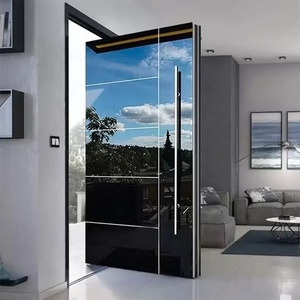
Manufacturer Direct Modern Security Front Entrance Pivot Door
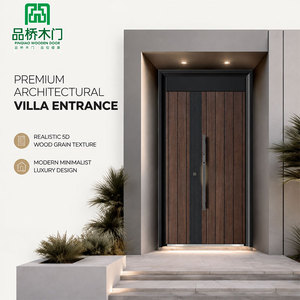
Customized T-Shaped Silent Structure Entry Door with 10" Smart Display
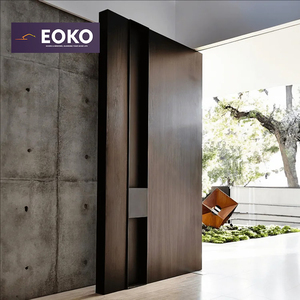
Custom Wood-Grain Aluminum Decorous Exterior Pivot Door
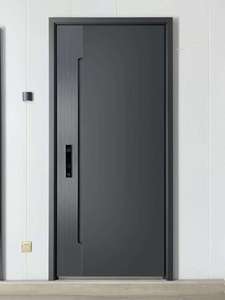
High-Performance Soundproof & Fireproof Aluminum Entrance Door
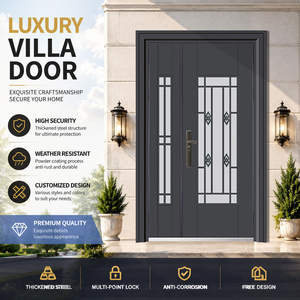
Customized Modern Swing Glass Entrance Door with Anti-Theft Frame
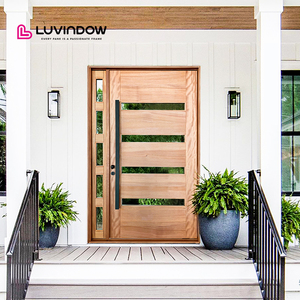
American Style Teak/Oak Wood Finish Heavy Commercial Entry Door
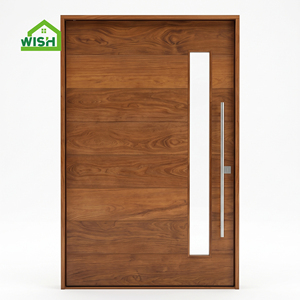
Oversized Solid Wood & Glass Insert Security Pivot Entrance Door
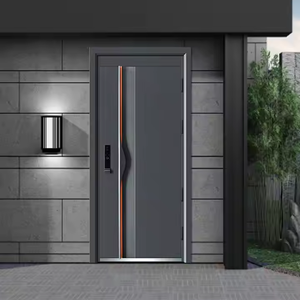
Apartment & Residential Anti-Theft Entry Door with Smart Lock
Engineering Deep-Dive: Key Product Development Trends
Discover how modern aluminum entry door manufacturing is advancing through kinetic hardware, smart IoT integration, and high-performance weatherproofing.
1. Kinetic Heavy-Duty Pivot Mechanics
Modern residential architecture demands grander, taller entrance openings. Engineering trends favor hidden offset pivot systems capable of supporting door leaves weighing up to 500kg. These systems feature internal hydraulic floor springs, adjustable top pin guides, and 360-degree soft-closing damping mechanisms, allowing effortless manual operation regardless of panel mass.
2. Polyamide PA66-GF25 Thermal Decoupling
To comply with stringent international carbon-neutral mandates and ENERGY STAR rating programs, aluminum door frames incorporate high-width polyamide thermal break profiles (PA66-GF25). This construction effectively eliminates cold/heat conduction through the metallic structure, preventing interior condensation while drastically lowering HVAC thermal loads.
3. Biometric & IoT Smart Ecosystems
Entry doors are transitioning into digital security hubs. Leading Chinese factories integrate hidden electronic mortise locks, 3D facial recognition cameras, encrypted RFID sensors, and 10-inch HD display touchscreens directly into the door structure. Compatibility with smart home protocols (Zigbee, Z-Wave, Matter) enables real-time access monitoring and remote app opening.
4. Laminated Hurricane Impact Glazing
For hurricane zones such as Florida, the Caribbean, and coastal Australia, doors are built with laminated impact glass units (e.g., 6mm Tempered + 1.52mm SGP/PVB Interlayer + 6mm Tempered). This engineering ensures that even if glass shatters under heavy projectile debris, the interlayer holds the barrier intact, resisting wind blowouts.
5. Advanced PVDF & 3D Sublimation Finishes
To overcome salt spray corrosion in seaside applications, surface coatings utilize Fluorocarbon (PVDF) electrostatic spraying exceeding Qualicoat Class 2 criteria. Additionally, 3D vacuum heat-transfer wood sublimation creates maintenance-free timber aesthetics that withstand intense UV exposure without fading or peeling.
6. Multi-Chamber Pressure Equalized Seals
Water infiltration is prevented via continuous dual- and triple-layer EPDM (Ethylene Propylene Diene Monomer) gasket loops combined with hidden bottom drop-down acoustic sweep seals. Internal profile chambers direct any wind-driven moisture through concealed drainage slots, preventing water ingress.
Future Procurement Trends in the Global B2B Aluminum Door Industry
Strategic insights for importers, architectural specifiers, general contractors, and commercial developers sourcing from Chinese manufacturing hubs.
As international construction dynamics evolve, foreign buyers are changing their sourcing models from purchasing off-the-shelf standard products toward co-engineered factory direct OEM/ODM customization. Understanding procurement trajectories allows sourcing directors to reduce risk, cut overhead, and accelerate project timelines.
1. Transition to Modular Pre-Assembled Sub-Frame Kits
Jobsite labor costs in North America, Europe, and Australia have reached historic highs. Consequently, B2B buyers now mandate that manufacturers deliver pre-engineered, factory-assembled sub-frames with pre-drilled anchoring slots and pre-cut hardware mortises. This modular plug-and-play delivery model reduces on-site installation time by up to 60%, drastically cutting contractor labor overhead.
2. BIM (Building Information Modeling) & CAD Integration
Top-tier Chinese suppliers now provide full 3D BIM (Revit) objects, CAD shop drawings, and structural calculations prior to production. This digital twin workflow allows architectural teams to verify structural load boundaries, thermal performance compliance, and rough opening tolerances before profile extrusion begins.
3. Supply Chain Transparency & Low-Carbon Aluminum
Environmental standards such as the EU Carbon Border Adjustment Mechanism (CBAM) and LEED green building certification require verifiable product life-cycle assessments. Leading manufacturers are adopting low-carbon hydro-powered aluminum extrusions and recycled aluminum alloys, providing full Environmental Product Declarations (EPDs) to support green building compliance.
Technical Performance Specifications Comparison
Engineering benchmark matrix for selecting optimal structural entry door configurations based on climate zone and security class.
| Door System Type | Thermal U-Factor | Acoustic Rating | Air & Water Tightness | Max Single Leaf Size | Recommended Applications |
|---|---|---|---|---|---|
| Thermal Break Heavy Pivot Door | 0.24 - 0.28 W/m²K | STC 42 - 45 dB | Pa 600 (Water) / Pa 1500 (Air) | 3,200mm (H) x 1,800mm (W) | Luxury Villa Entrances, Architectural Facades |
| Hurricane-Impact Swing Door | 0.28 - 0.32 W/m²K | STC 40 - 44 dB | Pa 900 (Water) / Pa 5000 (Wind) | 2,800mm (H) x 1,200mm (W) | Coastal Zone Residences, Caribbean Resorts |
| Smart Biometric Villa Entry Door | 0.26 - 0.30 W/m²K | STC 43 - 46 dB | Pa 500 (Water) / Pa 1200 (Air) | 2,600mm (H) x 1,100mm (W) | Smart Homes, High-Security Residential Estate |
| Fireproof Soundproof Entry Door | 0.30 - 0.35 W/m²K | STC 45 - 48 dB | EI30 / EI60 Fire Rated Integrity | 2,400mm (H) x 1,000mm (W) | Multi-family Apartments, Hotel Suites, Offices |
Enterprise Manufacturing Authority: Fortor Security Door Co., Ltd.
Why leading global distributors, real estate developers, and architectural firms partner with Fortor as their primary OEM/ODM door & window manufacturer in China.
Operating from a modern 20,000 square meter industrial manufacturing base in Guangdong, China, Fortor Security Door Co., Ltd. stands as a premier manufacturer and exporter of certified aluminum folding doors, thermal break windows, heavy-duty pivot entrance systems, and retractable sunrooms. Backed by over 17 years of specialized manufacturing expertise, Fortor maintains rigorous quality control standards throughout every phase of production—from raw profile extrusion cutting and CNC machining to surface finishing, glass glazing, final lock assembly, and export packaging.
Our engineered product lines undergo comprehensive third-party physical and structural testing to comply with stringent global regulatory codes:
Testing & Code Compliance
Certified against NFRC (National Fenestration Rating Council) thermal performance standards, AS 2047 structural wind pressure testing for Australia, CSA (Canadian Standards Association), and ENERGY STAR program criteria. Structural load test reports are readily available for municipal permit submissions.
Global Supply Chain & Dealer Network
Fortor exports factory-direct systems to B2B buyers in over 30 countries across North America, Australia, the United Kingdom, and the Caribbean. Dedicated showrooms and authorized service partners in the United States (Hayward, CA), Canada, Australia, and Jamaica provide localized project assistance and technical after-sales support.
Every project order executed by Fortor is built to custom architectural elevations. Prior to manufacturing, our technical engineering team delivers precise 2D/3D shop drawings detailing frame profiles, anchoring points, drainage tracks, glass specifications, and hardware schedules, ensuring seamless zero-defect installation on site.
B2B Procurement FAQ (Frequently Asked Questions)
Direct technical and logistical answers for overseas importers, architectural specifiers, and procurement managers.
Ready to Elevate Your Architectural Entrance Project?
Contact Fortor's engineering team today for technical shop drawings, structural consultation, NFRC/AS2047 test reports, and factory-direct pricing for your project.