The Evolution of Modern Apartment Security Doors: Strategic B2B Sourcing Guide
In the contemporary landscape of high-density multi-family urban housing and luxury commercial developments, entry door procurement has evolved far beyond basic aesthetics and simple privacy barriers. Property developers, general contractors, architectural specifiers, and hardware distributors face rigorous demands ranging from stringent structural wind-load pressure requirements and building codes to tenant security, fire endurance, and acoustic insulation.
Selecting a premier apartment security door supplier requires a technical understanding of structural engineering, material science, and global compliance frameworks. As urban density increases across North America, Europe, Australia, and the Middle East, apartment entry security doors serve as the critical line of defense between public corridors and private residential sanctuaries.
1. Technical Criteria for Engineering High-Performance Apartment Doors
When evaluating security door suppliers for large-scale multi-family developments, technical procurement directors must audit four key physical metrics:
- Structural Profile Material & Extrusion Alloy: High-grade 6063-T6 architectural aluminum extrusions provide an optimal strength-to-weight ratio. Unlike traditional mild steel doors that suffer from rust and heavy thermal bridging, or standard timber doors susceptible to moisture warping, engineered aluminum systems retain structural rigidity over decades of continuous use.
- Forced-Entry & Burglar Resistance Ratings: Enterprise-level apartment doors must satisfy standardized forced-entry resistance benchmarks, such as European Norm EN 1627 Class RC2, RC3, or RC4, or American ASTM F476. Key structural features include multi-point locking systems with hardened anti-saw deadbolts, anti-drill lock protection plates, and concealed heavy-duty hinges with anti-lift security pins.
- Acoustic Isolation (Sound Transmission Class - STC): Multi-family corridor noise pollution is a leading tenant complaint. High-performance security doors integrate acoustic cores composed of high-density mineral wool, expanded honeycomb structure, or composite polyurethane, coupled with dual-layer EPDM compression gaskets to achieve STC ratings between 38dB and 45dB.
- Thermal Insulation & Energy Efficiency: Thermal bridging through entry doors severely impacts a building's overall energy consumption. Incorporating PA66-GF25 (25% glass-fiber reinforced polyamide) thermal break strips isolates external cold or heat, lowering overall U-factors in compliance with NFRC, AS 2047, and ENERGY STAR specifications.
Comparative Specification Matrix for Commercial Security Doors
To assist procurement managers and project engineers inshortlisting optimal entry door systems, the following matrix compares core door typologies across standardized performance metrics:
| Security Door System | Core Structural Material | Security Rating (EN 1627 / ASTM) | Acoustic Rating (STC) | Thermal Break (U-Factor) | Primary B2B Application |
|---|---|---|---|---|---|
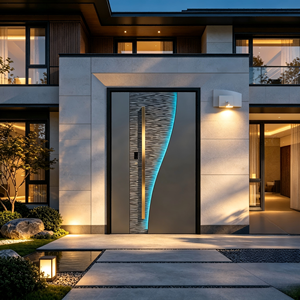
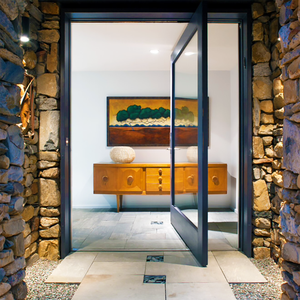
| Architectural Aluminum Pivot Door | 6063-T6 Extruded Aluminum | RC3 / RC4 High Security | 40 dB - 42 dB | 0.28 - 0.35 BTU/hr-ft²-°F | Luxury Villa Main Entries, Penthouse Portals |
| Thermal Break Casement Entry Door | PA66-GF25 Polyamide + Aluminum | RC2 / RC3 Standard Commercial | 42 dB - 45 dB | 0.22 - 0.30 BTU/hr-ft²-°F | Multi-Family Apartments, High-Rise Residential |
| Hurricane Impact Laminated Door | Reinforced Aluminum + SGP Glass | Miami-Dade High-Velocity Zone | 38 dB - 40 dB | 0.32 - 0.38 BTU/hr-ft²-°F | Coastal Commercial Frontage, Beachfront Resorts |
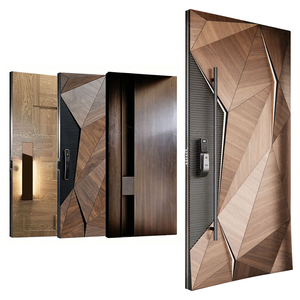
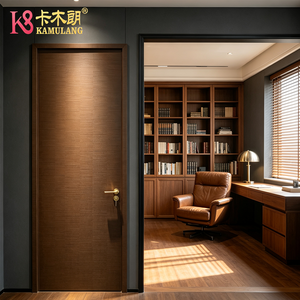
| Solid Composite Timber / Bamboo Door | High-Density Acoustic Wood Core | RC2 Interior Security | 42 dB - 46 dB | N/A (Interior Rated) | Hotel Suite Entries, Luxury Corridor Portals |
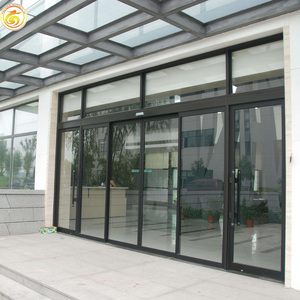
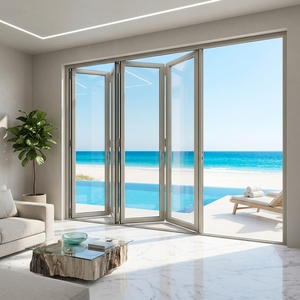
| Panoramic Folding Glass Door System | Heavy-Duty Aluminum Tracks | RC2 Multi-Point Locked | 35 dB - 38 dB | 0.30 - 0.36 BTU/hr-ft²-°F | Balcony Portals, Hospitality Terraces |
Future Procurement Trends in the Security Door Industry
The global market for commercial and residential apartment security doors is undergoing rapid technological transformation. Importers, wholesalers, and real estate developers must align their supply chains with several emerging industry trends to maintain a competitive advantage:
1. Seamless Smart IoT & Biometric Integration
Traditional physical keys are rapidly being superseded by fully integrated smart locking ecosystems. Modern apartment security doors now feature factory-prewired 3D facial recognition scanners, biometric fingerprint sensors, encrypted RFID card readers, and remote smartphone app authorization modules. These smart mortise systems connect directly to central building management software (BMS) for real-time security monitoring.
2. Ultra-Slim Sightlines with High Structural Integrity
Architectural design preferences favor minimalist aesthetics with expansive glass paneling and narrow frame sightlines. Achieving slim visual profiles without sacrificing structural rigidity demands advanced structural engineering. Thermally broken aluminum profiles reinforced with concealed steel stiffeners allow giant panel heights exceeding 3 meters while maintaining resistance to extreme wind pressures.
3. Sustainable Manufacturing & Circular Economy Materials
With international carbon emission regulations tightening, global developers prioritize door suppliers utilizing low-carbon recycled aluminum, water-based non-VOC powder coatings, and sustainably harvested bamboo composite cores. Supply chain auditing now routinely includes environmental product declarations (EPDs) alongside standard testing certificates.
Fortor Security Door Co., Ltd.: Manufacturing Excellence & Capabilities
As a specialized China-based manufacturer with over 17 years of dedicated production experience, Fortor Security Door Co., Ltd. operates out of a state-of-the-art 20,000 square meter manufacturing base in Guangdong, China. Supplying B2B importers, developers, architects, and contractors across more than 30 countries, Fortor controls every phase of production under one integrated quality management system.
Unlike third-party trading agencies, Fortor manages raw material procurement, precision CNC profile cutting, corner crimping, glass unit assembly, thermal insulation insertion, hardware fitting, and rigorous pressure-chamber testing completely in-house. This centralized control guarantees consistent build quality, competitive factory-direct pricing, and reliable lead times for overseas project schedules.
Frequently Asked Questions for B2B Procurement
Is Fortor a direct door manufacturer or a trading company?
Which international building standards and certifications do Fortor security doors meet?
Can product dimensions, frame colors, glazing, and smart hardware be fully customized?
What technical information is required to receive an accurate project proposal and price quote?
How does Fortor manage international logistics and installation support for global projects?
What is the standard manufacturing lead time for custom door orders?
Partner with a Trusted Global Security Door Manufacturer
Streamline your commercial procurement with factory-direct pricing, certified structural engineering, and guaranteed export quality from Fortor Security Door Co., Ltd.