Premier Modern Glass Entry Door Systems
Explore our export-ready, NFRC, AS 2047, and Florida Hurricane Approval compliant exterior glass door assemblies manufactured to precision commercial specs.
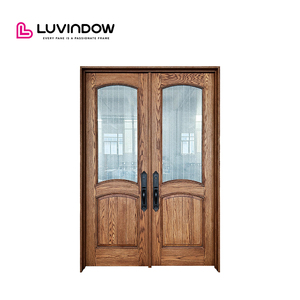
Modern Solid Wood Entry Front Door With Custom Carving And Low-E Double Tempered Glass For Apartment & Exterior Use
Contact Us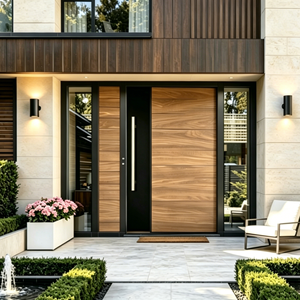
High Quality Modern Villa Entrance Front Entry Doors Aluminum Alloy Wood Exterior Door Double Glazed Glass Sound & Waterproof
Contact Us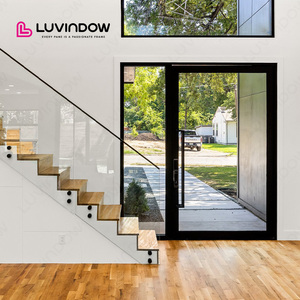
Modern Style Main Entrance Door Heat Insulated Aluminum Double Glazed Glass Pivot Door
Contact Us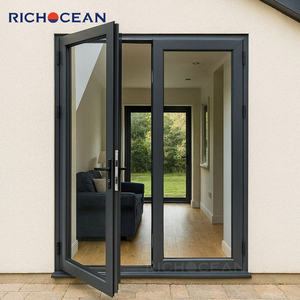
RICHOCEAN Hotel Commercial Hurricane Impact Aluminum Triple Glass French Swing Door Patio Entrance Double Doors
Contact Us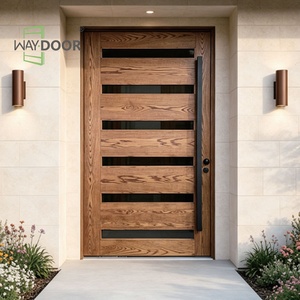
Customized Stain Finished 6-Lite Glass Panels Heavy Duty Oak Mahogany Solid Wood Pivot Door for Entry
Contact Us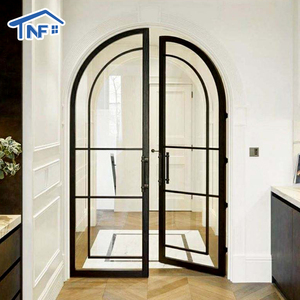
Custom Slim Aluminum Framed Swing Glass Crittall Style Arched Double Glazed Interior Casement Patio Entrance French Doors
Contact Us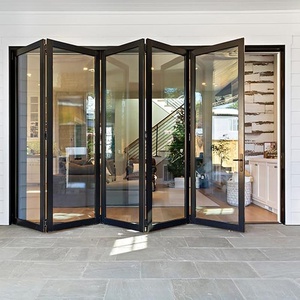
YY Florida Approval American Villa Exterior Apartment Front Doors Design With Glass Entrance Door for House Doors
Contact Us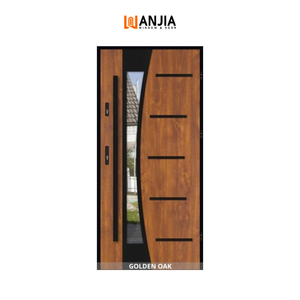
Factory Warranty Directly Custom Wood Grain Finish Front Entry Door with Mirrored Glass Residential Exterior Security Doors
Contact UsArchitectural Blueprint for Modern Glass Entry Systems
A technical evaluation of thermal break thermodynamics, structural load capacity, and glass panel engineering for tier-1 commercial and luxury residential projects.
In contemporary architectural engineering, the main entrance is no longer merely a point of egress; it represents the primary envelope junction balancing structural integrity, thermal dynamics, security, and visual elegance. The global transition toward zero-energy building envelopes (NZEB) and structural glass facades has positioned modern glass entry doors at the intersection of material science and architectural design. Sourcing high-performance exterior doors requires rigorous evaluation of profile metallurgy, thermal barrier continuity, glass chemistry, and hardware load-bearing mechanics.
1. Thermal Dynamics & Metallurgy: Thermal Break Aluminum Extrusions
Standard architectural aluminum possesses high thermal conductivity (approx. 200 W/m·K), making uninsulated frames a liability for HVAC efficiency and condensation control. Advanced modern glass entry doors manufactured by Fortor Security Door Co., Ltd. utilize 6063-T5/T6 structural aluminum alloy profiles integrated with mechanical polyamide (PA66 GF25) thermal barrier strips. Reinforced with 25% glass fiber, these PA66 strips decouple the exterior profile from the interior frame, dramatically reducing thermal transmittance.
This structural decoupling achieves a U-factor rating as low as 0.18 to 0.24 BTU/h·ft²·°F (1.0 to 1.37 W/m²K), satisfying the stringent thermal performance benchmarks set by the NFRC (National Fenestration Rating Council) and ENERGY STAR programs across North American climate zones 4 through 7.
2. Structural Glass Technology & Impact Resilience
The glass component of a modern front entrance door must provide acoustic isolation, solar heat control, and physical security without compromise. High-spec configurations incorporate double or triple insulated glass units (IGUs) filled with 90%+ pure argon gas, supported by warm-edge stainless steel or composite spacers.
- Low-Emissivity (Low-E) Coatings: Spectrally selective silver nanolayers applied via magnetron sputtering reflect long-wave infrared thermal energy while retaining solar light transmittance (VLT > 68%), minimizing Solar Heat Gain Coefficient (SHGC ≤ 0.22).
- SentryGlas® (SGP) Laminated Impact Glazing: For coastal applications requiring hurricane protection, units are engineered with structural ionoplast interlayers (SGP) that are 5 times stiffer and 10 times more tear-resistant than conventional PVB interlayers. This design complies with Florida Product Approval (TAS 201/202/203) and Miami-Dade High-Velocity Hurricane Zone (HVHZ) testing standards (DP60+ rating).
- Acoustic Isolation (STC/OITC): Utilizing asymmetrical glass thickness (e.g., 8mm toughened outer + 12mm argon gap + 6.64mm laminated inner) breaks sound wave resonance, delivering Sound Transmission Class (STC) ratings up to 43 dB, crucial for urban hospitality and luxury apartments.
Future Procurement Trends for Global B2B Buyers
Strategic insights into how architects, developers, and door importers are shifting their sourcing criteria over the next decade.
Over-Sized Architectural Pivot Mechanics
Traditional side-hinged entry doors face weight limitations. Sourcing preferences are rapidly shifting toward floor-to-ceiling modern glass pivot doors capable of spanning widths over 2.5 meters and panel weights exceeding 500 kg. Concealed hydraulic bottom pivot hinges with adjustable closing speeds and 90-degree hold-open functions are becoming standard for grand luxury entrances.
Electrochromic Smart Privacy Glazing
Commercial developers and luxury homeowners are demanding dynamic switchable glass (PDLC). At the press of a button or integrated into smart home automation platforms (Zigbee/KNX), glass doors transform instantly from crystal-clear transparency to complete opaque privacy without requiring motorized blinds or drapes.
Biometric & Keyless Security Integration
Procurement specifications now routinely demand factory-fitted multi-point electronic locking systems featuring 3D facial recognition, fingerprint sensors, RFID cards, and encrypted smartphone app controls. Integrated motorized latch bolts provide seamless access while resisting physical forced entry.
Product Development & Innovation Trajectory
How manufacturing techniques are evolving to meet stricter carbon neutral targets and minimalist aesthetic demands.
Ultra-Slim Sightlines & Structural Silicone Glazing (SSG)
Architects continue to push for invisible frame profiles. Modern glass entry door development focuses on Structural Silicone Glazing (SSG), where structural high-modulus silicone bonding replaces traditional exterior aluminum beads. This produces a continuous, flush glass facade with ultra-narrow vertical aluminum stiles (under 20mm visible width), maximizing daylight while retaining structural wind resistance.
Alu-Wood Hybrid & Fluorocarbon Powder Finishes
Combining the exterior weatherability of powder-coated aluminum with the internal natural warmth of solid teak, oak, or mahogany is a growing design paradigm. Advanced development incorporates Qualicoat Class 2 hyper-durable fluorocarbon (PVDF) dry powder coatings on exterior surfaces, guaranteeing 20+ years of resistance against UV radiation, chalking, sea-salt corrosion, and color fading.
Manufacturer Advantage & Supply Chain Rigor
Direct factory manufacturing backed by 17+ years of engineering experience and certified global compliance.
20,000㎡ Manufacturing Base
Equipped with automated 5-axis CNC machining centers, precision profile double-head cutting saws, and automated corner crimping lines in Guangdong, China.
Certified Quality Standards
Fully tested and verified under NFRC, AS 2047 (Australia), CSA (Canada), and ENERGY STAR compliance. Complete mill test reports available for project tenders.
30+ Export Destinations
Over 1,500 projects delivered across North America, Australia, the UK, and the Caribbean. Dedicated overseas showrooms and localized technical support.
Comparative Performance Benchmark Table
Evaluate key technical parameters across door frame types to match your local building code requirements.
| System Category | Structural Alloy / Timber | U-Factor Range | Max Wind Load (DP) | Acoustic STC | Recommended Application |
|---|---|---|---|---|---|
| Thermal Break Pivot Door | 6063-T6 Aluminum (2.5mm) | 0.19 - 0.23 BTU/h·ft²·°F | DP55 - DP65 | 38 - 42 dB | Grand Villa Entrances, Luxury Penthouses |
| Hurricane Impact French Door | Reinforced Alu + SGP Interlayer | 0.22 - 0.26 BTU/h·ft²·°F | DP60 - DP80 (HVHZ) | 40 - 44 dB | Coastal Resorts, High-Velocity Wind Zones |
| Alu-Wood Hybrid Entry Door | 6063-T5 + Oak/Teak Cladding | 0.17 - 0.21 BTU/h·ft²·°F | DP45 - DP55 | 36 - 40 dB | Cold Climate Private Residences, Boutique Hotels |
| Crittall-Style Slim Glass Door | Minimalist Aluminum Stiles | 0.24 - 0.29 BTU/h·ft²·°F | DP40 - DP50 | 32 - 36 dB | Urban Luxury Apartments, Modern Patio Entrances |
B2B Buyer Sourcing & Technical FAQ
Critical considerations for international procurement officers, general contractors, and fenestration importers.
What technical credentials must modern glass entry doors possess for North American & Australian import? +
How does Fortor mitigate long-distance ocean freight shipping risks for heavy glass assemblies? +
Can entry doors be engineered to integrate with third-party Smart Home and Access Control hardware? +
What is the lead time from CAD shop drawing approval to destination port arrival? +
What warranty coverage is provided for commercial exterior glass doors? +
Ready to Engineer Your Project's Next Entrance Solution?
Consult with our structural door engineers today. Receive detailed BIM models, shop drawings, thermal calculations, and competitive direct factory pricing within 24 hours.
Contact Us