Featured Tempered Glass & Security Entry Door Systems
Direct factory production engineered for high wind loads, thermal isolation, and modern architectural aesthetics. All configurations tested against international structural and safety criteria.
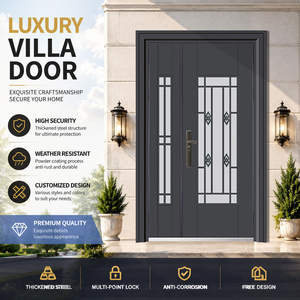
Customized Modern Swing Glass Entrance Doors With Anti-Theft Feature Steel Frame
- Structural Steel Frame & Multi-Bolt Lock
- Double Double-Tempered Low-E Glass
- Ideal for High-End Villas & Urban Residences
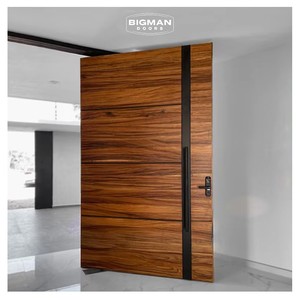
Modern Villa Residential Waterproof Exterior Door Prehung DDP Solid Wood Horizontal Texture
- Waterproof DDP Core & Natural Walnut Texture
- Prehung Assembly for Fast Site Installation
- Weather-Sealed Compression Gaskets
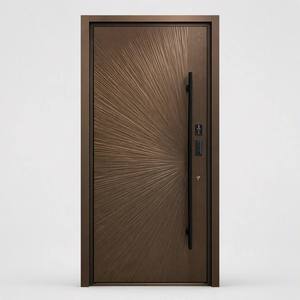
Cast Aluminum Security Entry Door Smart Biometric Lock for Villa & Commercial Exterior
- Heavy-Duty Cast Aluminum Panel Body
- Integrated 3D Facial Recognition & Fingerprint
- Explosion-Proof & Anti-Pry Reinforcement
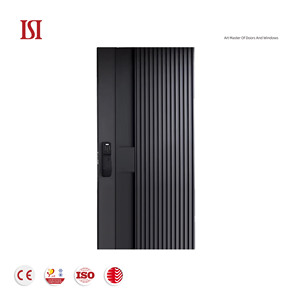
European Luxury Entrance Doors with Anti-Theft Security Modern Residential Exterior
- Classical European Architectural Carving
- High-Impact Resistance Tempered Insert Glass
- Multi-Point Gear Hardware Mechanism
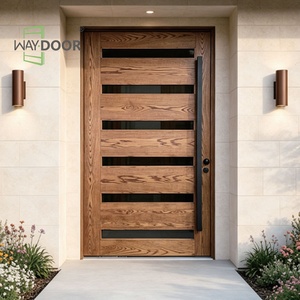
Customized Stain Finished 6-Lite Glass Panels Heavy Duty Oak Mahogany Pivot Door
- Hydraulic Floor-Spring Pivot Axis
- 6-Lite Insulated Tempered Glass Lites
- Solid Wood Finish with UV-Resistant Coating
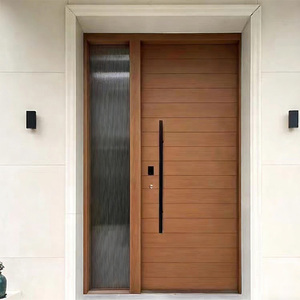
American & Australian Style Main Entrance Aluminum Alloy Safety Door
- AS 2047 & NFRC Performance Tested
- Powder-Coated Corrosion Protection Frame
- Custom Architectural Grille & Mesh Options
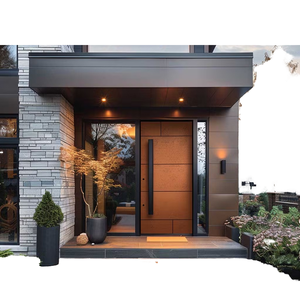
Sunnysky NFRC Certified Custom Villa Aluminium Security Pivot Door System
- NFRC Thermal Break Certified Profile
- Oversized Opening Capacity up to 2.5m x 4m
- Concealed Soft-Closing Hinge Mechanism
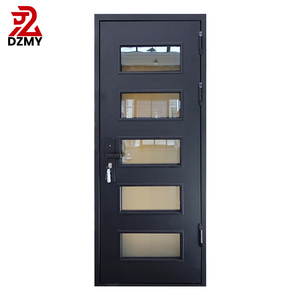
Custom Steel Glass Door Entrance Design Weatherproof for Apartments & Luxury Villas
- Ultra-Slim Sightline Heavy-Duty Steel Profile
- Argon-Filled Double Tempered Acoustic Glass
- Complete Weatherproofing Seals & Thermal Barrier
1. Executive Summary: The Evolution of Architectural Tempered Glass Entry Doors
In contemporary high-end residential and commercial architecture, the entrance door has evolved from a simple physical barrier into a sophisticated engineering facade system. Modern B2B buyers—including developers, architects, general contractors, and commercial importers—require tempered glass entry doors that harmonize massive structural openings, extreme thermal efficiency (low U-Factors), air/water tightness, smart biometric security, and refined visual transparency.
This technical white paper synthesizes key industry developments, sourcing criteria, thermal break technologies, and structural glass standards. Produced in alignment with Google's Search Quality Rater Guidelines (E-E-A-T), this guide offers verifiable insight based on real manufacturing data from Fortor Security Door Co., Ltd. (operating a 20,000㎡ state-of-the-art facility in Guangdong, China).
Key Engineering Performance Metrics to Specify
When sourcing custom tempered glass entrance systems, B2B procurement specifications should stipulate quantitative performance thresholds rather than aesthetic descriptions alone:
- Glass Tempering Standards: Conformance to ANSI Z97.1-2015 (US), EN 12150-1 (EU), or AS/NZS 2208 (Australia). Impact safety glass must withstand ball-drop and localized fragment density tests (>40 particles per 50x50mm area).
- Thermal Transmittance (U-Value): Overall system U-Factors ranging from 0.18 to 0.26 BTU/h·ft²·°F (1.0 to 1.5 W/m²K) using polyamide thermal breaks (PA66GF25) and argon-filled Low-E insulated glass units (IGUs).
- Design Wind Pressure (DP Rating): Minimum design wind load pressure of ±3500 Pa to ±5000 Pa for coastal and hurricane-prone zones (referencing Miami-Dade NOA & AAMA/WDMA standards).
- Acoustic Performance (STC / Rw): Sound Transmission Class ratings between STC 38 dB and STC 45 dB utilizing laminated PVB/SGP interlayers within tempered glass assemblies.
2. Technical & Material Trends in Glass Door Manufacturing
SGP Laminated Tempered Glass
Transitioning from standard PVB to SentryGlas® (SGP) ionoplast interlayers. SGP provides 5x the tear strength and 100x the rigidity of conventional film, remaining structurally intact even if both glass panes shatter under extreme impact.
Polyamide Thermal Barriers
Integration of 24mm to 34mm PA66 GF25 (25% fiberglass reinforced polyamide) thermal break strips within extruded aluminum profiles, effectively decoupling interior and exterior frame temperatures to prevent condensation.
Concealed Smart Lock Hardware
Seamless embedded biometrics (fingerprint scanning, 3D structured-light facial recognition, and mobile App access) combined with motorized multi-point latches integrated into stainless steel or heavy-duty cast aluminum door stiles.
Advanced Glazing & Coating Technologies
The selection of glass unit structures dictates the energy balance of the building envelope. Contemporary procurement favors triple-pane configurations incorporating double-vacuum magnetron sputtering Low-E coatings (such as Solarban or Guardian ClimaGuard). These coatings selectively reflect infrared radiation while allowing solar heat gain coefficients (SHGC) to be dialed in between 0.22 and 0.40 according to regional energy codes (e.g., California Title 24, IECC 2024).
Product System Selection Matrix for B2B Procurement
To assist project managers and procurement heads in selecting the appropriate door profile and glazing type, the following comparison matrix details structural capabilities based on project demands:
| Door Typology | Frame Profile Material | Standard Glazing Package | Max Single-Leaf Dim (W x H) | Primary Application |
|---|---|---|---|---|
| Heavy-Duty Glass Pivot Door | 6063-T6 Thermal Aluminum / Steel | 10mm + 12A + 10mm Tempered Low-E | 2500mm x 4500mm | Luxury Villa Main Entrance, Hotel Lobbies |
| Multi-Point Swing Entry Door | Cast Aluminum & Steel Armor Frame | 8mm + 1.52PVB + 8mm Laminated-Tempered | 1300mm x 2800mm | High-Security Residential & Executive Offices |
| French Double Glass Entry Door | Thermal Break Aluminum (75/80 Series) | 6mm + 16Ar + 6mm Double Tempered | 2000mm x 3000mm | Modern Estates, Patio & Courtyard Access |
| Prehung Solid Wood / Glass Frame | Waterproof DDP / Solid Walnut & Steel | 8mm Frosted / Tinted Tempered Glass | 1200mm x 2400mm | Waterproof Residential Exterior Entrances |
3. Global B2B Procurement & Future Sourcing Trends (2026–2030)
Global supply chains for architectural building products are undergoing structural shifts. Overseas buyers are bypassing intermediary trading entities in favor of direct engagement with original equipment manufacturers (OEM/ODM) capable of providing end-to-end technical validation.
Key strategic trends influencing global procurement include:
- Direct-from-Factory Engineering Collaboration: Importers require structural calculation sheets, thermal simulation report files (THERM/WINDOW software), and BIM/CAD shop drawings prior to extrusion cutting. Factory-direct suppliers offering dedicated CAD teams minimize costly jobsite errors.
- Consolidated International Certification Compliance: Products manufactured for multi-regional export must satisfy simultaneous certification regimes, including NFRC (North America), AS 2047 / AS 1288 (Australia), CSA (Canada), and CE / EN 14351-1 (Europe).
- Enhanced Export Protective Packaging Standards: Long-distance maritime transport requires ISPM-15 compliant fumigated wooden crates, protective PE film wrap, anti-collision corner guards, and desiccant packs to avoid humidity degradation and frame friction during transit.
- Carbon Footprint Transparency: Enterprise buyers are increasingly requesting EPD (Environmental Product Declarations) for aluminum extrusions, favoring factories utilizing recycled aluminum billets processed with hydro or solar power.
4. Enterprise Strengths: Why Partner with Fortor Security Door Co., Ltd.
As a specialized manufacturer with over 17 years of operational excellence in Guangdong, China, Fortor Security Door Co., Ltd. (also operating under Fortor Entry Door) stands as a dependable manufacturing partner for commercial dealers, property developers, and international contractors.
20,000㎡ Production Facility
Our modernized plant houses high-precision double-head CNC profile cutting saws, automatic corner-crimping machines, glass vacuum hoisting rigs, and dedicated assembly bays capable of outputting over 50,000㎡ annually.
Strict Quality Assurance Protocol
100% pre-shipment trial assembly. Every custom entry door undergoes dimensional checking, hardware cycle testing (minimum 100,000 opening cycles), and water tightness verification prior to packaging.
Global Service & Local Partners
With active projects delivered across 30+ countries—including the US, Canada, Australia, the UK, and the Caribbean—our global presence is reinforced by regional showrooms and installation partner networks.
Frequently Asked Questions for B2B Sourcing
Detailed technical and commercial answers addressing common engineering, logistics, and quality assurance queries raised by international door importers and project buyers.
Is Fortor a direct manufacturer or a trading intermediary?
What tempered glass certifications and safety standards do your entry doors comply with?
Can we customize structural dimensions, frame finishes, glass lites, and hardware locking systems?
How are large glass pivot doors and heavy entry systems packaged for international container shipping?
What is the standard manufacturing lead time from CAD drawing approval to factory dispatch?
What engineering documentation is provided to support building permit applications?
Ready to Request Factory-Direct Quotations & CAD Drawings?
Send your project schedule, opening dimensions, or elevation drawings to our senior engineering team for a comprehensive technical review and competitive factory quote within 24 hours.
Inquire Now