Architectural Aluminum Entrance Systems in Saudi Arabia: Mitigating Desert Microclimates
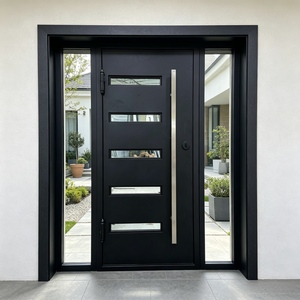
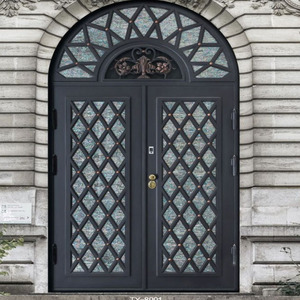
The Kingdom of Saudi Arabia (KSA) is undergoing an unprecedented architectural renaissance, spearheaded by Vision 2030 megaprojects such as NEOM, the Red Sea Project, Diriyah Gate, and vast luxury residential developments by ROSHN. As contemporary villa design shifts away from traditional heavy masonry toward expansive, light-filled architectural elevations, the exterior main entry door has evolved into a critical structural and thermal barrier.
Selecting luxury aluminum entry door systems for high-end residential mansions, royal estates, and commercial headquarters in Saudi Arabia requires navigating extreme environmental conditions. Ambient outdoor temperatures frequently exceed 50°C (122°F) during summer peak months, while solar radiation on dark door surfaces can drive surface temperatures above 80°C (176°F). Furthermore, seasonal sandstorms (Shamal) blow fine quartz dust particles at high velocity, exerting severe pressure on door seals, mechanical locks, and surface finishes.
Information Gain Insight: Standard non-thermal aluminum doors suffer from high thermal conductivity (k ≈ 200 W/m·K), causing rapid heat transfer into air-conditioned interiors, frame expansion, and severe lock misalignment. Fortor’s Saudi-spec entry doors utilize heavy-wall 6063-T6 aluminum alloy profiles integrated with 24mm to 34mm PA66-GF25 (polyamide 66 reinforced with 25% glass fiber) thermal break strips, reducing overall door system U-factors to as low as 1.2 W/m²·K.
Thermal Expansion and Structural Integrity in High-Heat Environments
Aluminum exhibits a thermal expansion coefficient of approximately 23 × 10⁻⁶ /K. For a grand entrance pivot door standing 4.5 meters in height exposed to a 40°C temperature differential between the scorching exterior face and the chilled 22°C interior, uneven frame expansion can cause structural bowing—commonly known as the "Bi-metal effect."
Fortor Security Door Co., Ltd. solves this structural engineering challenge by implementing split-profile thermal break assemblies combined with flexible shear-stiff polyamides and anti-expansion sliding alignment cleats. This structural decoupling allows the exterior aluminum extrusion to expand independently without imparting torque onto the interior frame or binding the multi-point locking rods.
Sandstorm (Shamal) Proofing: Triple EPDM Gaskets & Anti-Abrasive Hardware
Windborne sand in regions like Riyadh, Al-Khobar, and Madinah acts as a natural abrasive and fine aerosol that easily penetrates standard residential weatherstripping. Fortor entry door systems incorporate a continuous triple-barrier seal strategy:
- Primary Outer Seal: High-grade EPDM rubber gasket resistant to UV degradation and extreme thermal ozone aging.
- Secondary Acoustic & Thermal Chamber: A central cavity within the profile structure that drops air pressure, preventing wind-driven dust infiltration.
- Inner Compression Seal: Perimeter rebate gasket ensuring airtight closure meeting ASTM E283 air leakage standards.